Por Julio Príncipe, Mónica Salazar y Maria Inés Romero, Parents.
A few weeks ago, Inés and Gianni (guides of Ascend and Discovery, respectively) traveled with the Pumas who attended the international Acton network gathering in El Salvador. Some Mapaches (parents of the Pumas) took turns accompanying the Discovery Tribe while they were away.
Our task was clear: simply be present, without intervening, unless there was an imminent safety risk.
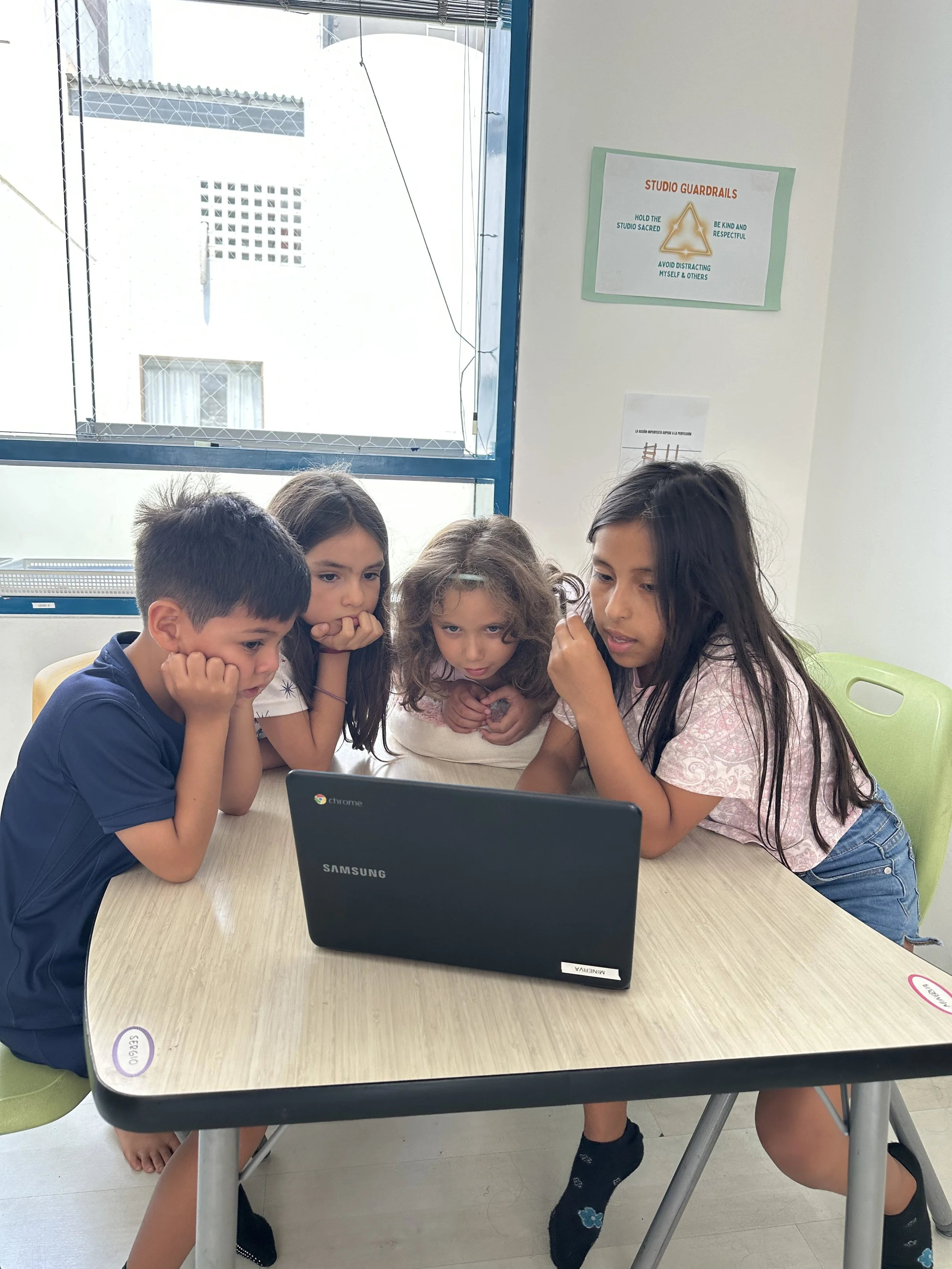
In this blog we share three perspectives of what we observed.
They arrive on time. Without adults.
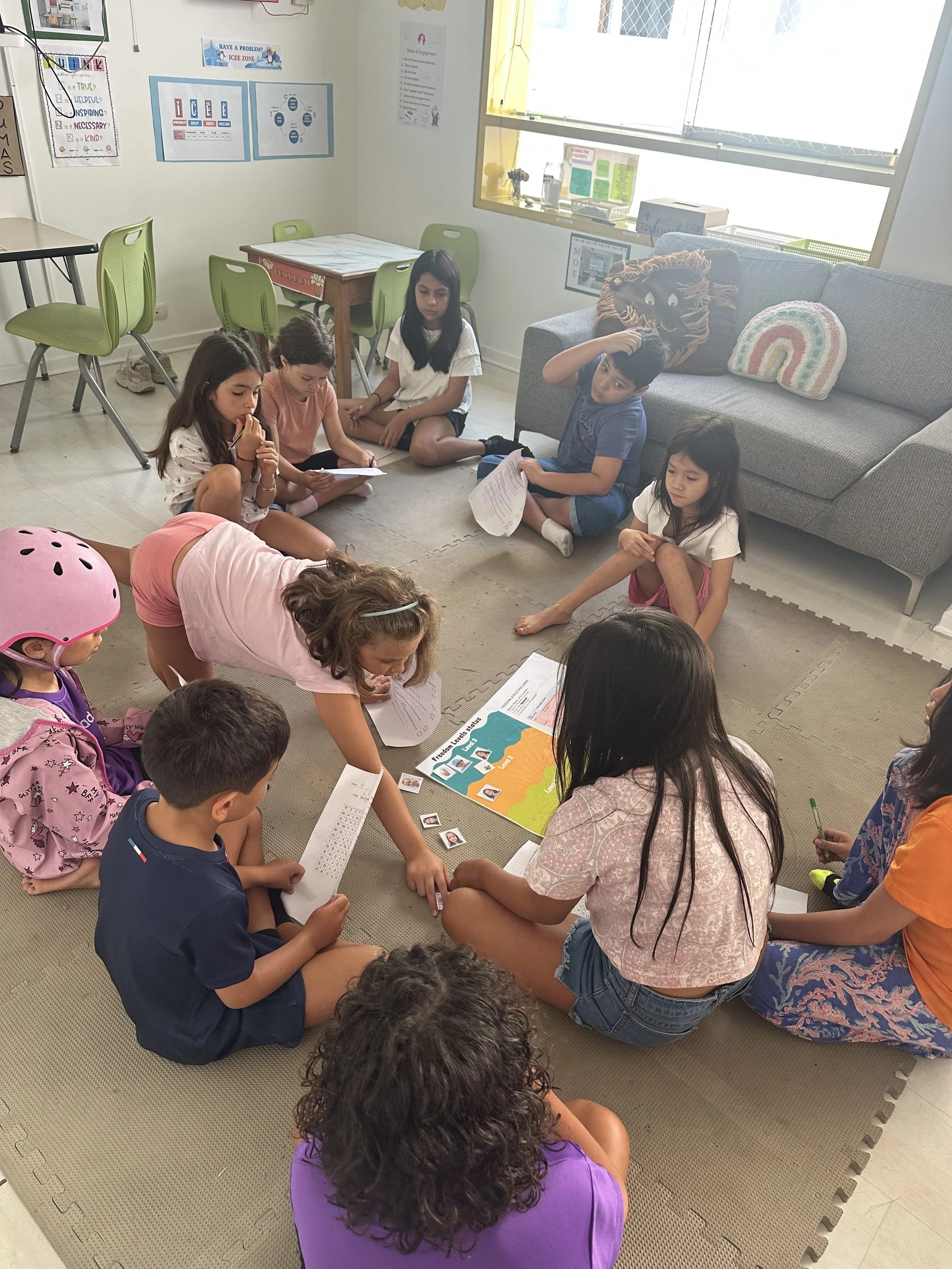
At 8:00 a.m., after Gonzalo rings the bell, they sit in a circle and organize themselves. Minerva shows a video. They share what they understand and clarify the rules of the game.
They barely look at me (and I try not to look at them either).
Another day, I arrived flustered that morning. We were late. Just one minute late, but the Launch door was already closed. It immediately struck me how consistently the Tribe honors the agreement of punctuality at the start of the day.
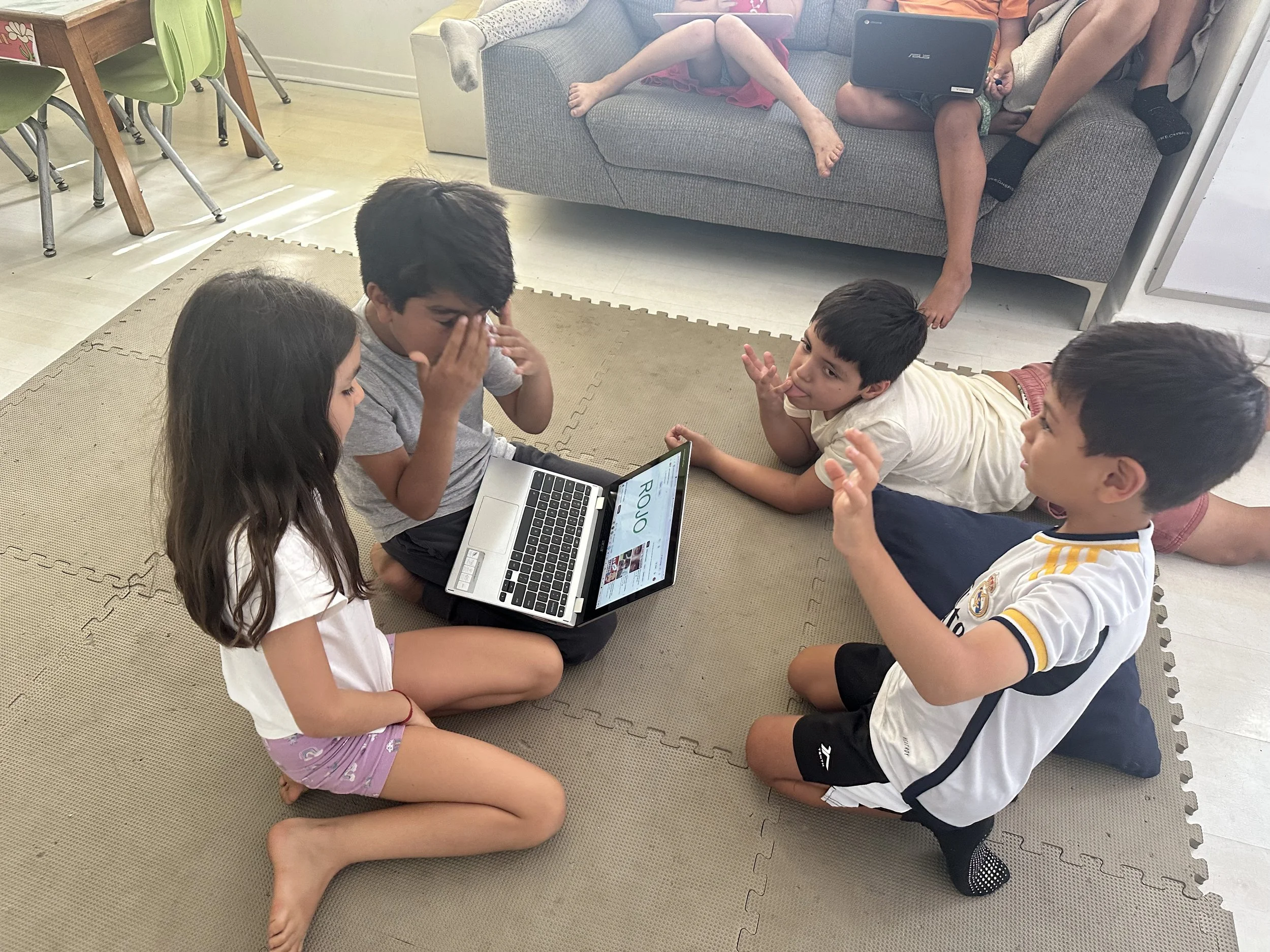
Vicentte gives the instructions for the game. They play with joy but with order. They are the most responsibly playful people I have ever seen. They are clear about their boundaries and kind when telling someone they are out of the game or that they arrived late and can only watch.
Just as they were playing with energy, a minute later they were already sitting in their Flow spots.
The truth is that they knew exactly how to move forward and manage their day.
It was challenging for me not to intervene when, for example, I saw someone choose to do something else instead of studying or working. But the next day I would see that same Puma become aware of their choice and step up to move forward.
If I had stepped in and asked why they were not working, I might have gained them a day of productivity. But the learning and awareness that come from realizing it themselves will serve them much more in the long run.
And that is part of their rules of the game: taking responsibility for their choices.
It is one thing to know that this happens because we have read about it in Courage to Grow or because our own Pumas tell us about it.
But it is something completely different to witness it firsthand.
What would it be like to become a Puma for at least one day?
When I say this, I realize something: autonomy is both a personal choice and a collective creation.
In the Tribe, the rules are clear, shared, agreed upon, and respected, and they promote autonomy.
It is impressive to watch this group of children between 6 and 10 years old stay organized and working in flow for hours, honoring the limits that support them and helping each other resolve the day’s questions.
Each Puma has clear goals. They know how to move forward and what they need to do individually, while also following the Studio’s routine and schedule.
But this is not individual work. It is the work of the Tribe.
For example, it is common to see older Pumas recommending books to younger ones for their badge plans or offering suggestions on how to move forward.
After a snack break, they return and get back to work.
Again, without an adult telling them what to do.
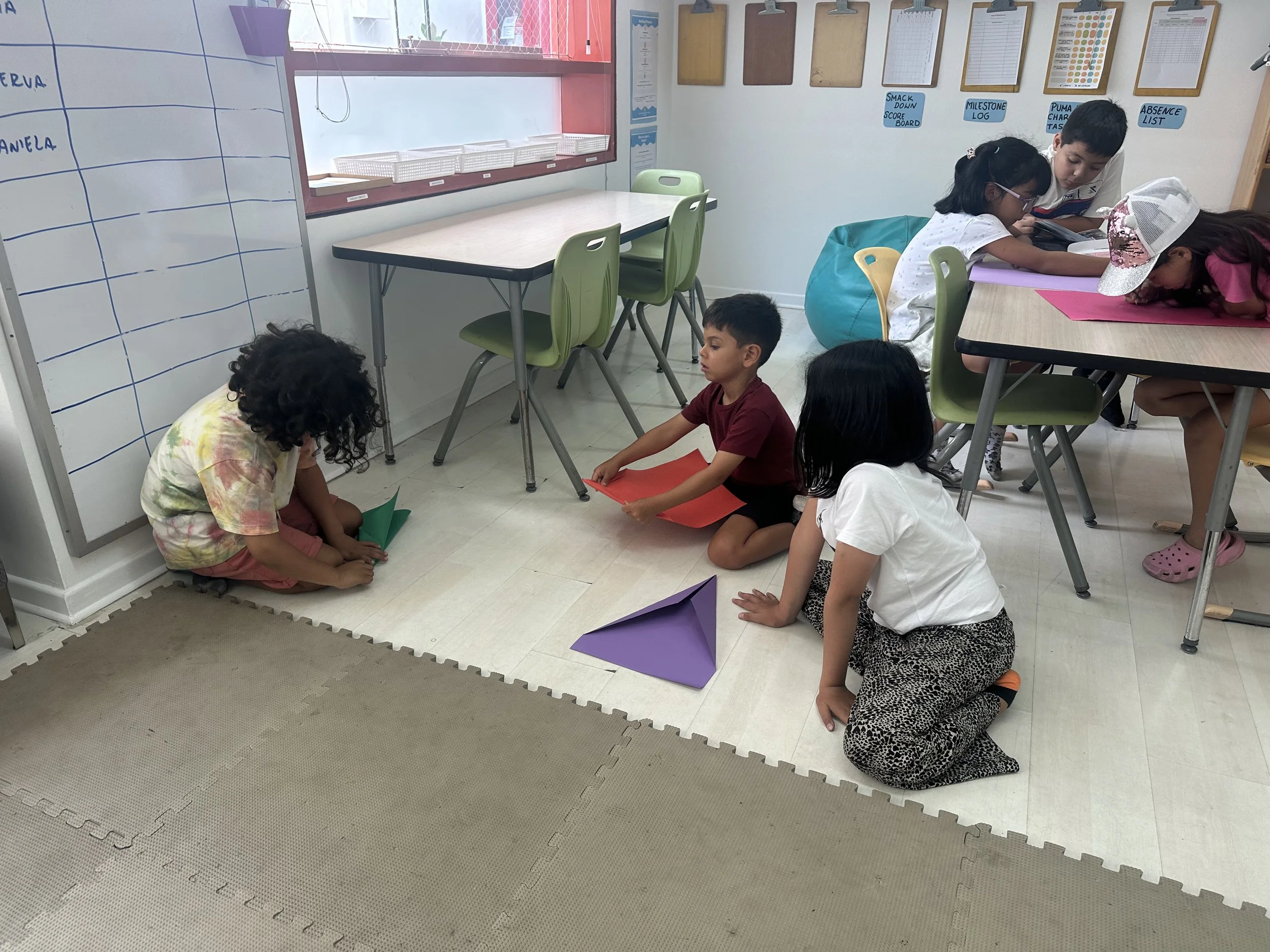
Some play a little with each other while others stay focused. A discussion about what is and what is not a tribe problem, what defines a problem, and what solutions might exist was both fun and very clear. Examples included setting the clock correctly or avoiding making a mess in the bathrooms.
But not everything was fun.
There were also moments of conflict.
One Puma proposed an activity for the group and the group followed. Later another Puma made a discouraging comment that affected the Puma who had suggested the idea. The group became somewhat disoriented. Some continued the activity while others stopped.
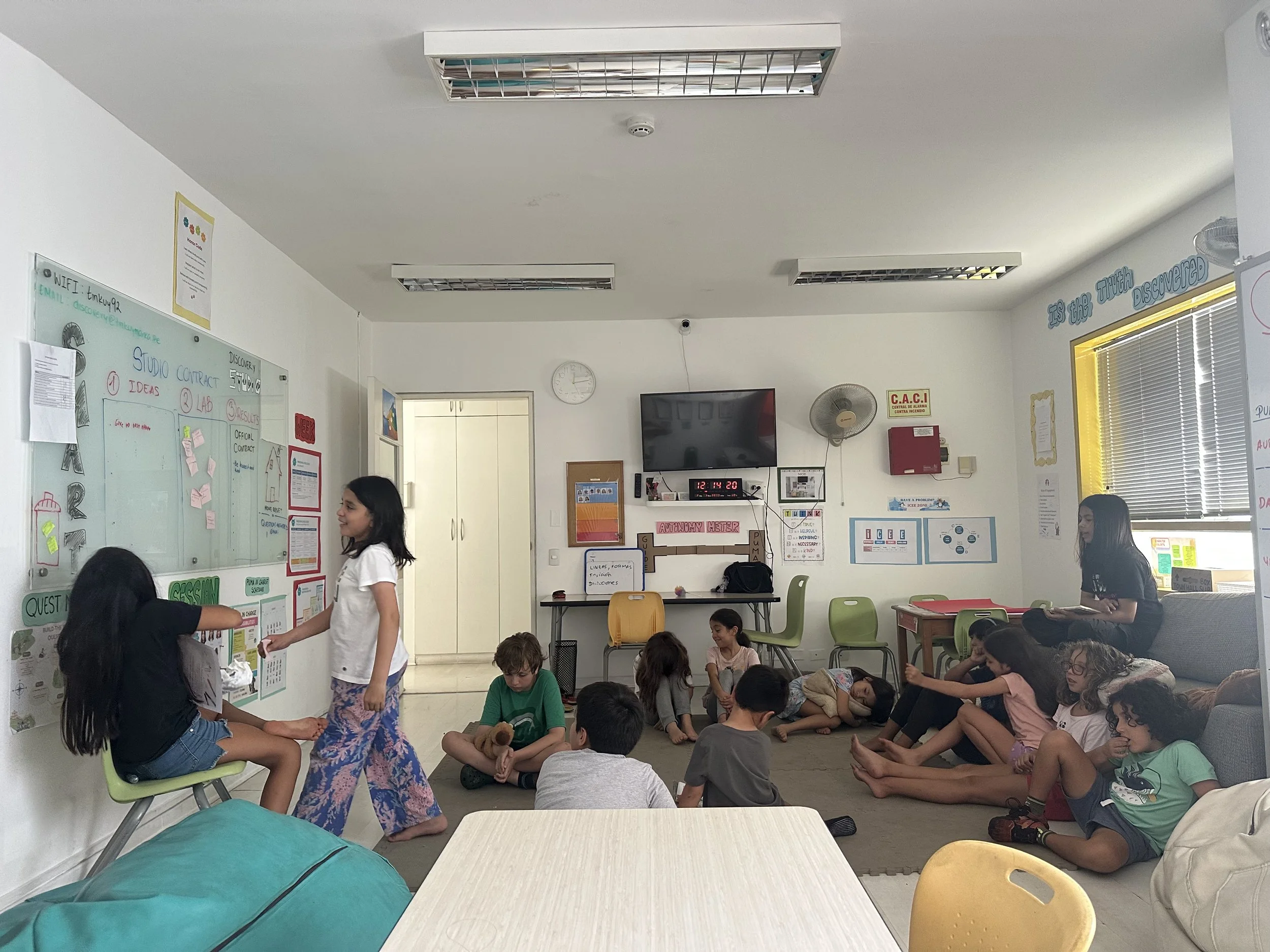
In the middle of that tension I saw a younger Puma walk over to support the Puma who had made the suggestion, who was holding back tears.
Another day a Puma ran into the room shouting, “You will not believe what happened.”
The air conditioner hose in the Flow room had come loose and water covered the floor.
I was about to step in and tell them what to do, but then the oldest Puma raised her voice and started organizing them.
Within seconds some went to get mops, others buckets, others cloths and paper towels.
Everyone sprang into action.
I watched with admiration but also a little desperation as they passed by me with dripping cloths and spread the water further.
After rehearsing in my head how to say something helpful without interfering too much, I suggested to one of them that they could use the sink to wring out the mops.
They all figured out how to do it.
After several long minutes the floor was completely dry, the Pumas were back to their work, and I felt grateful to have witnessed it.
Toward the end of the day, after tidying up, they enjoyed a shared game where they had to guess who the “killers” were. I delighted in the glances, the winks, and the sense of shared complicity that filled this game and the closing of the day. Everyone enjoyed being part of the group, playing together before heading home and meeting again the next day.
That is how those days went by for us. With our own challenges, with excitement about the journey our Pumas are on, with admiration for every Puma, and with the emotion of seeing how much a child can grow when they are listened to, supported by a structure that holds them, and respected in their process so they can move forward on the Hero’s Journey of their own story.
And well, as Aurelia said at the end of the day on Friday, “I think we did well without Gianni, didn’t we?”