By Ines Kudo
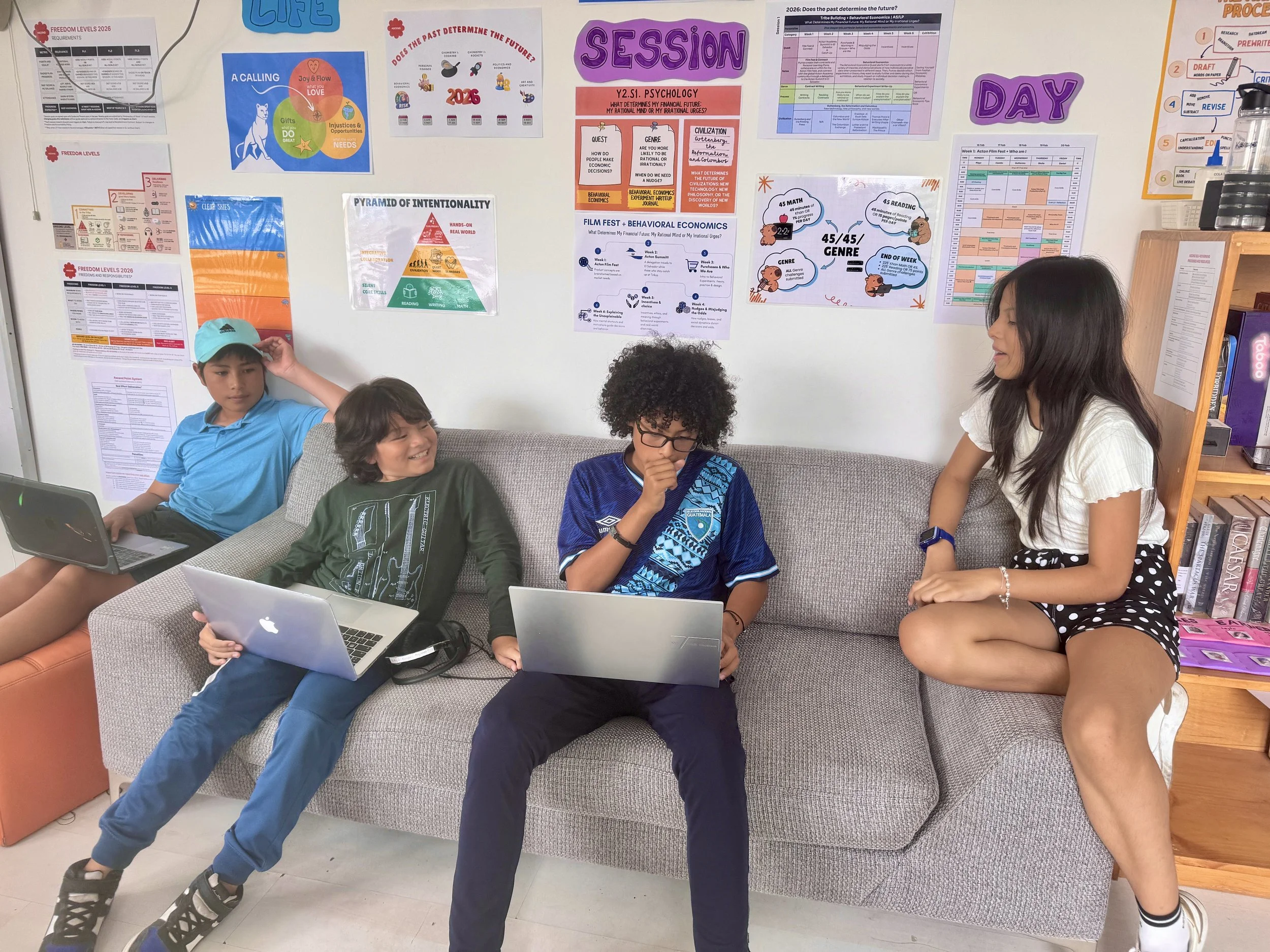
At Tinkuy, one crucial part of learning and life is 360 feedback. Every week, our Pumas practice appreciating the ripple effects of their choices: when they strengthen the Studio’s culture, and when they weaken it. Then they practice saying it out loud in a way that is honest, clear, and kind.
That takes time. Early feedback can feel blunt, confusing, even unfair. Sometimes they even copy-paste questions as answers. Yet, week by week, they build a muscle most adults rarely develop: telling the truth without breaking the relationship.
I’m sure that, by the time they graduate from Tinkuy, they will have grown into powerful communicators, solid teammates, and effective leaders. They will know what is expected of them. They will dare to ask when they do not know. They will know what to expect from others. They will dare to speak up when expectations are not met, without blaming or hiding, and without turning it into drama.
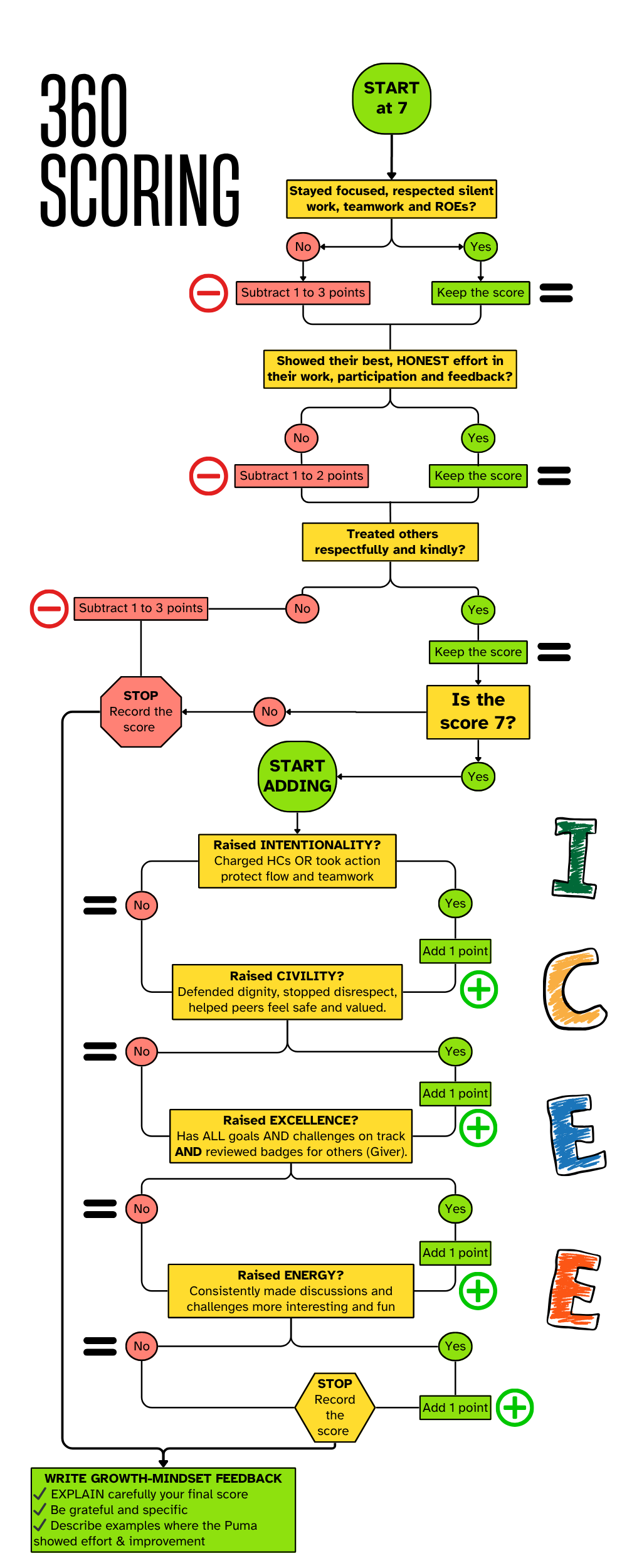
This year in Ascend we are testing a new format for the weekly 360. It is only one question. The new format “is like a game”, as Sofía put it: start with a score, subtract or add based on the impact observed. It is subjective, while giving them shared language for what they care about: honoring promises, protecting teamwork, and keeping the Studio healthy.
Yes, scores are lower this year than last year. This is not because they are doing worse. On the contrary, it's because they are holding clearer, higher standards and expectations towards each other. All of this while encouraging and praising each other.
I want to take you on a brief journey of discovery, by sharing with you some of what they write to each other. I hope I can reveal how character is nurtured through practice.
Can you spot the growth mindset being developed?
“Well done on your second week in the Studio. I think that you are doing great, but you are not up to date and you don’t finish Civ on time. I know Civ is hard to do, and I believe next time you’ll do better and push harder.”
“I’ve been seeing you work almost all the time in your desk quietly, but somehow, you’re still behind. I know you can put more effort even if this can feel overwhelming for you, and don’t be afraid to ask for help whenever you need!”
Do you notice how they hold up the mirror with genuine empathy?
They are also learning to name what is not working without turning the person into the problem. They focus on actions, patterns, and next steps. They are practicing being direct without being cruel.
“You worked on your goals, but you are missing being up to date with your Quest challenges, and you have been charged 2 Hero Coins for distracting the Studio. I know that you can do better, just keep going, and learn from your mistakes.”
“I subtracted 1 point because you distracted me when you were bothering Lucía, begging her to give you her charger. You could do it more silently next time. I cannot add points, but if I could I would add points for an excellent book review.”

And sometimes they do something even harder. They name feelings without weaponizing them. This one stayed with me:
“You were not honest with me, and that made me sad. You told me that you were up to date when you really weren’t. That’s why I subtracted 1 point. If I could add points I would add for raising intentionality. I am truly grateful that you asked me Hero Coins for not doing my Council job.”
Boundary and gratitude in one place. A real attempt at integrity. It’s like a driver thanking the police officer for issuing a ticket because their SOAT wasn’t up to date.
It's not just critiques. When things go well, they often name effort, struggle and craft, not just outcomes, which is the beginning of coaching. That shift changes a culture fast.
“Great job working on things, for example, your pitch. You put effort and corrected everything so it was excellent without doing it faster just to complete your goal.”
“At the start of the week, you were distracted a lot, but then you started to focus on yourself and balance talking and working with other people in the Studio.”
Imagine being new at something, and getting this comment from someone more experienced you look up to:
“I have seen you working and asking questions when you didn’t understand something, well done. I call that courage.”
Wouldn't you feel proud and energized to keep trying?
And how often do we take the time to express gratitude or admiration for other people's seemingly small acts of kindness? They do!
“You did a great job… when I asked you to help me in the auditions, you didn’t think twice.”
“You made me happy during Free Time when you were helping me get out of the zipline when I was scared. You made me feel valued.”
Of course, the 360 also invites temptation. The slippery slope where a 360 stops being feedback and starts being an exchange of favors (logrolling) or a personal vendetta (weaponizing). Week 4 gave us a clean side-by-side. Two Pumas score a “10” to a peer. One explained it like this:
“This week you protect flow because you didn’t get distracted and you ask warnings… you will complete your weekly goals… you participated in almost all the discussions… you show kindness when you help Galla with his doubts… you raised excellence… you audited the badges.”
You can see the attempt to connect points to real, specific actions. Compare it to the other “10”, for someone else:
“You did a great job!!! you catched up with prealgebra, you were very kind and working!!! All perfect.”
I asked the Council whether both 10s were correctly awarded. We decided to discard the second one to keep scores fair. We also discarded low scores that are not sufficiently explained. Discarded scores and feedback do not go into the final results. And only when a score is discarded can I, as a Guide, see who sent it and to whom. That is how I could tell the discarded 10 was from friend to friend.
Was it logrolling? I will let you decide for yourself. For us, it was a tough call, and it sent an important message. If trust breaks here, the 360 stops being useful.
And what if someone feels the feedback they got is plainly unfair? This happens every week. Most of the time, Pumas voice their disagreement, reflect on why the other person misperceived or misjudged their actions, and sometimes talk it out. They all still accept the score.
One week, a Puma received a low score connected to laughing at a peer’s mistake in Civilization, and they pushed back out loud: “What! Why did someone take points from me for laughing at a mistake in Civ if I was not in that group!” She did not know who gave her the feedback. The author chose to step forward: “You laughed at him after we came back. Many of you did, that is why I gave you a 5.”
She answered, clearly confused: “But I saw him laughing too and thought it was a joke.” The Puma who was laughed at in the referred incident, added: “I don’t really care if they laugh.” And then the Puma who gave the score reaffirmed his choice: “You should not laugh at his mistakes even if he does.”
Can you see the courage this whole exchange took? A younger learner telling his older Studio mates, with actions, loud and clear: I don't like this to be part of our culture, I will do what I can to change it and to help you see my point of view too. Because, even if he doesn't care if others make fun of his mistakes, there may be some of us who can feel hurt.
Conversations like this one happen every week now. That is the culture being negotiated in real time. That is why we do 360s.
Week by week, our Pumas are getting better at it. Their 360° feedback is not perfect, and it is not always fair. It is a mirror of the culture they are building together. And that, to me, is real leadership in the making.