By Rosa Torres
At the Spark Studio, snack time becomes a meaningful daily ritual: a space where autonomy, care, and generosity are actively practiced. This blog shares how this young tribe experiences food as an opportunity for connection and sharing.
The Puma in charge arrives at Tinkuy early with the snack and places it on the dining table. Then they participate in lunch, engage in quiet play activities, and glance at the clock from time to time. At 9:30 a.m., they recognize it is time to begin preparation.
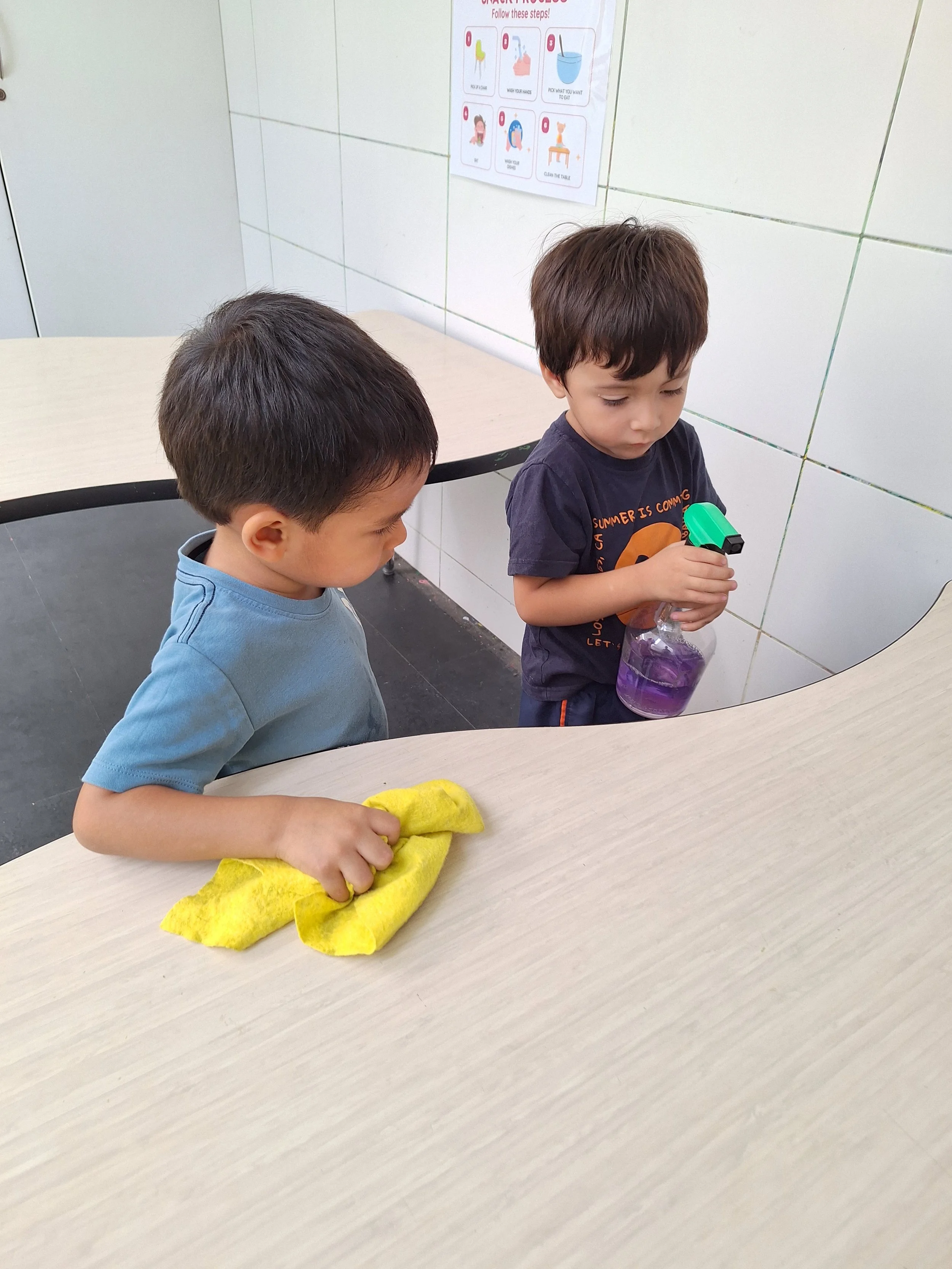
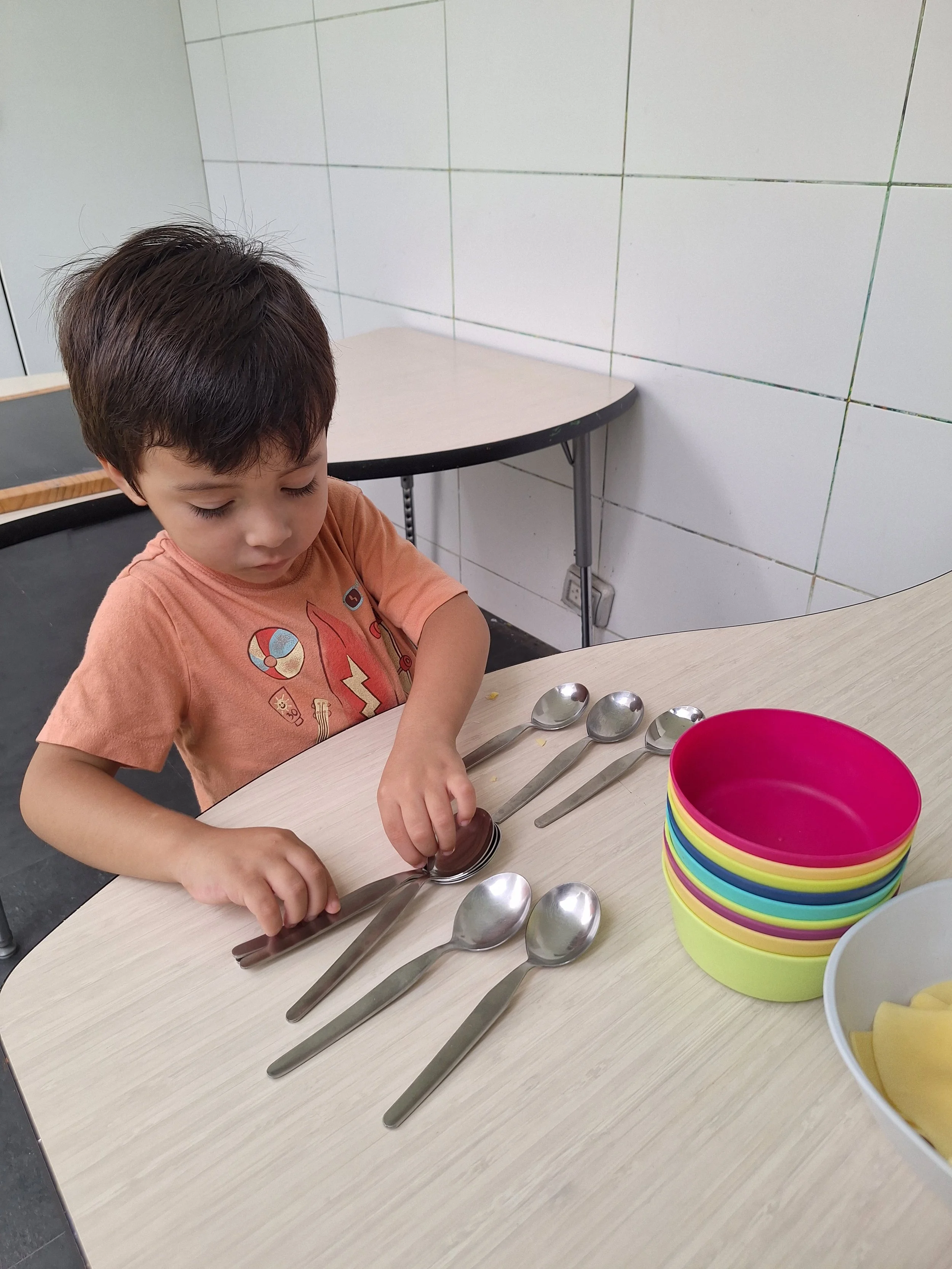
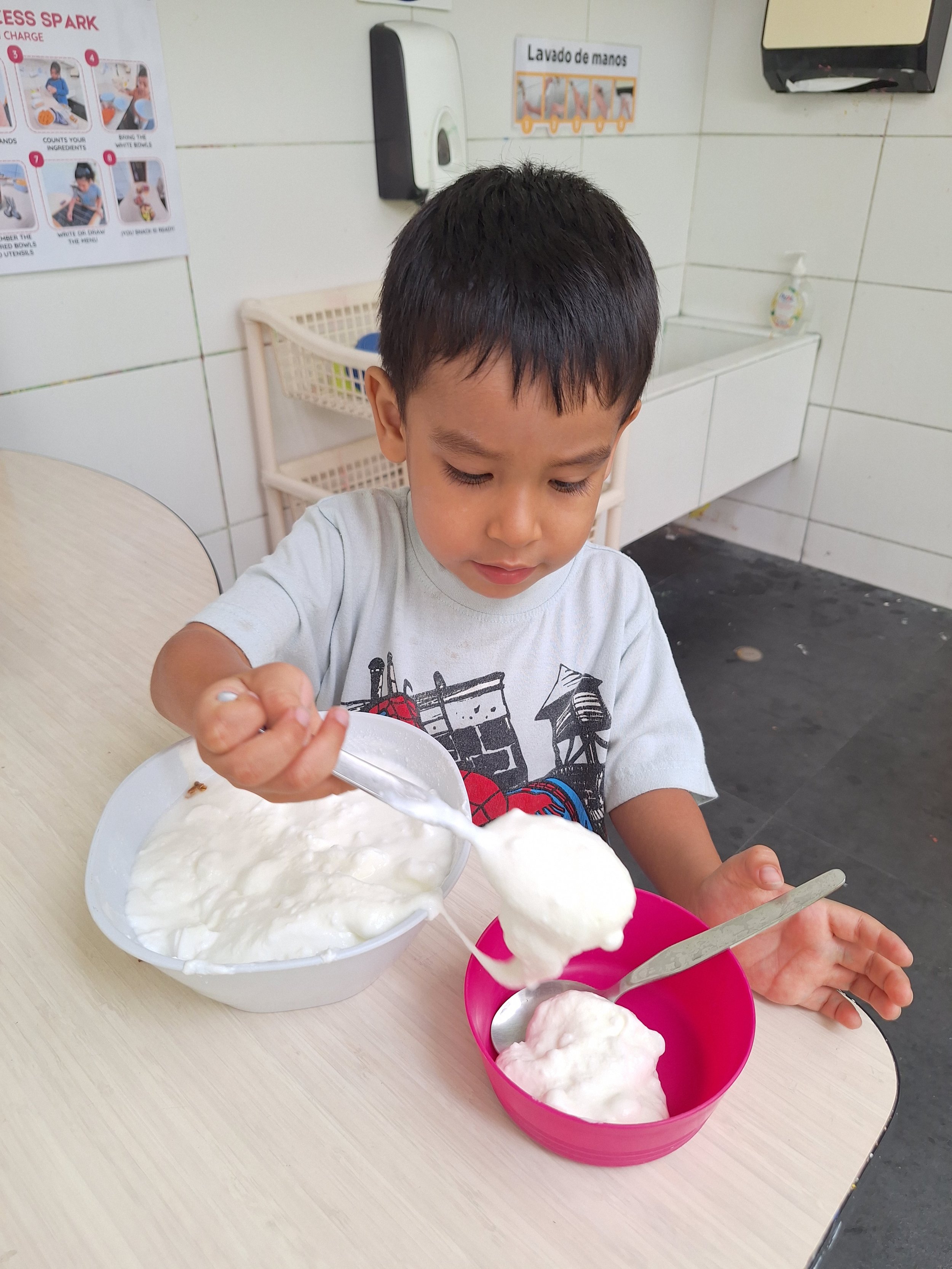
They pause their focused work and approach the table. They look at the poster displaying the sequence of steps and follow it attentively: first, clean the tables; then wash their hands; count the ingredients; set out the white bowls; place the ingredients; prepare the colored bowls and spoons; write the menu on the board; and finally, make sure everything is ready. Each action is carried out with intention, order, and care.
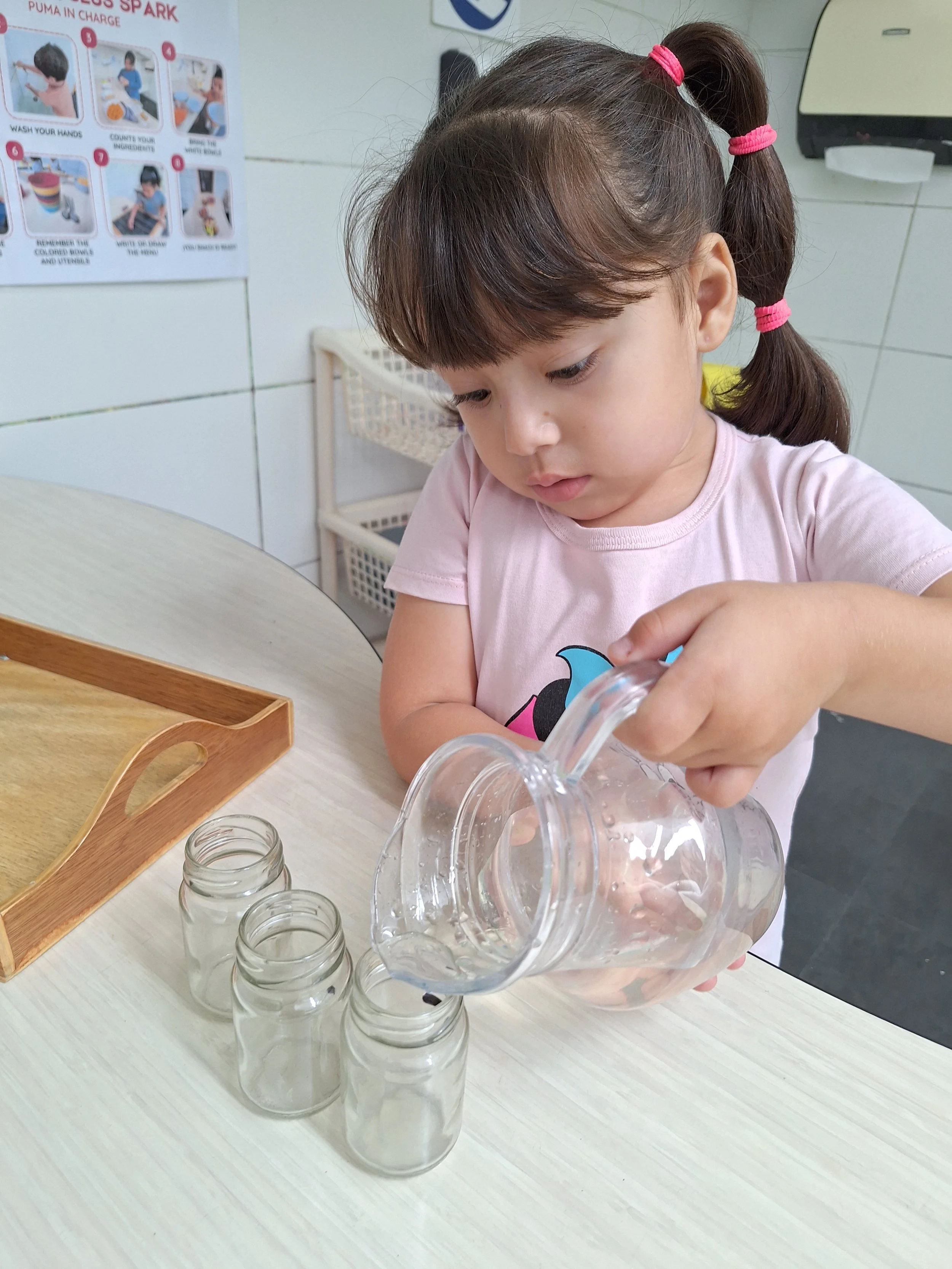
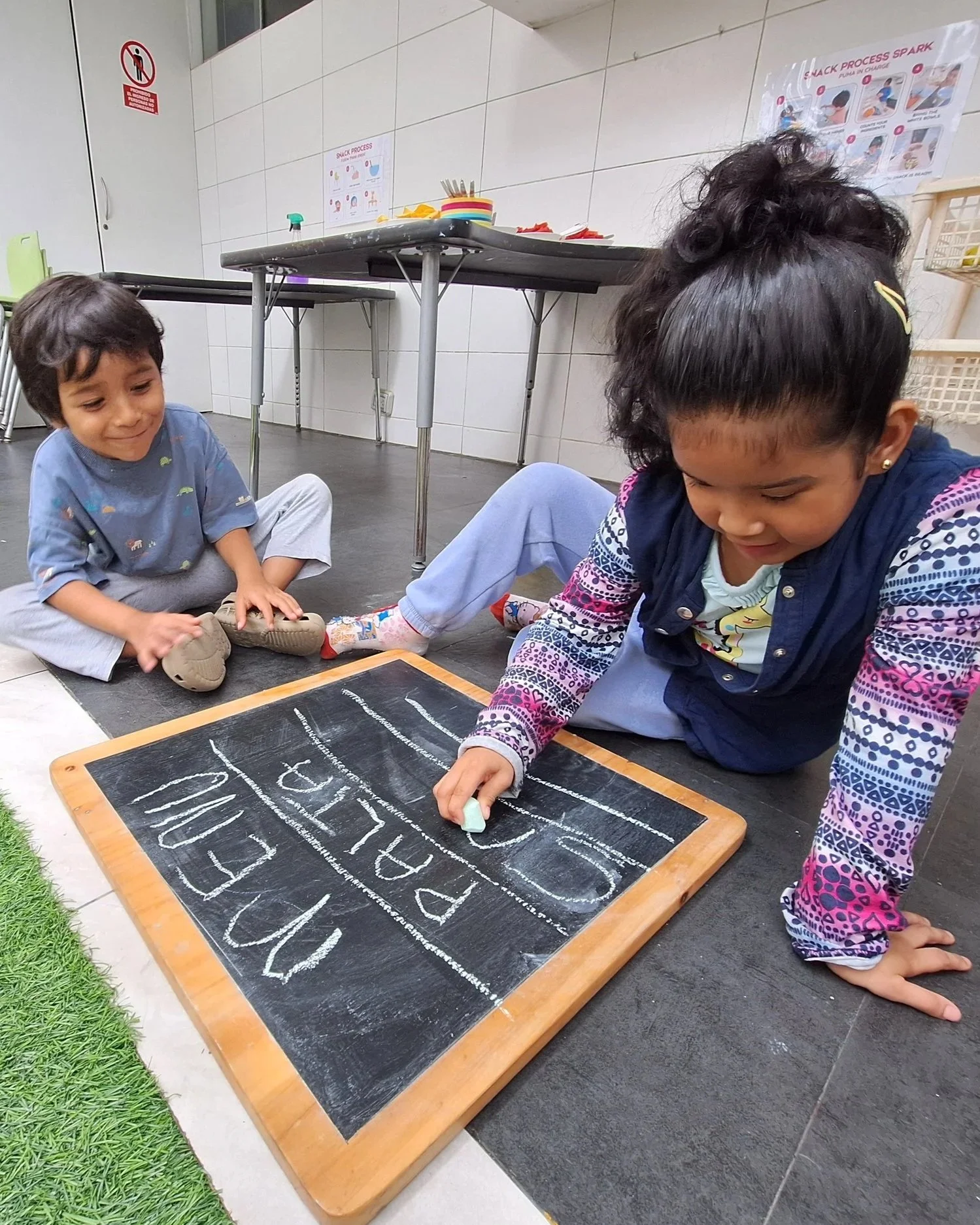
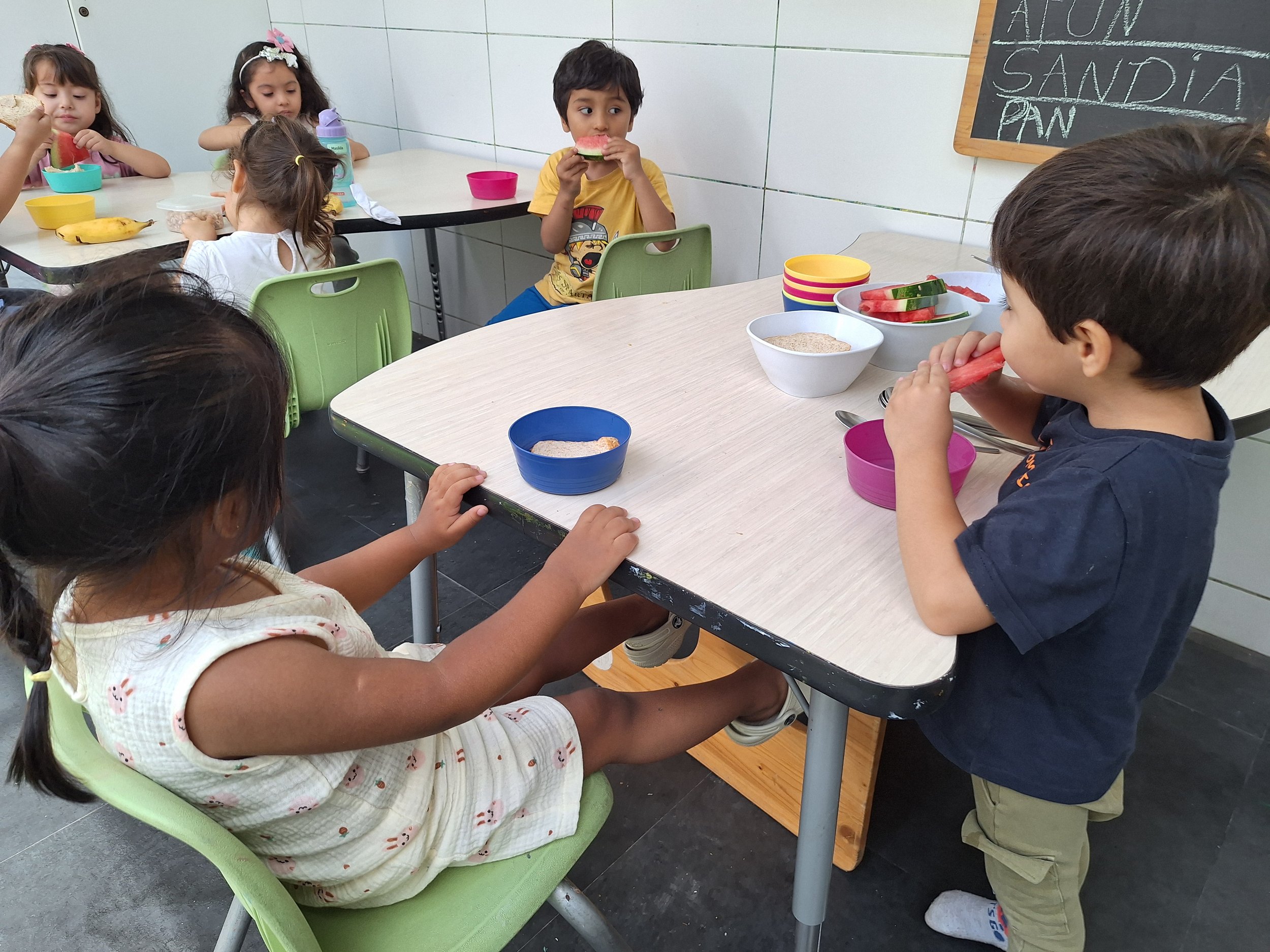
Once the process is complete, the Puma lets the tribe know that the snack is ready. Some approach with curiosity to see what has been prepared, while others serve themselves directly. Gradually, they sit down and begin to enjoy the moment.
From Maria Montessori’s perspective, snack time is not a rigid or necessarily collective moment, but rather an opportunity to foster autonomy, self-awareness and self-regulation within a prepared environment. And so, each child practices every day the tough skill of listening to their own body, and understanding the signals of hunger. They can choose to eat when they feel hungry, respecting their own biological rhythms instead of following external schedules. Or they can choose to join friends and enjoy a good conversation while snacking together. At Spark Studio, we give them a wide window of time for them to decide when to eat, typically from 9:45 a.m. to 11:30 a.m. When there are left overs, we invite them to finish them later in the day if they get hungry again.
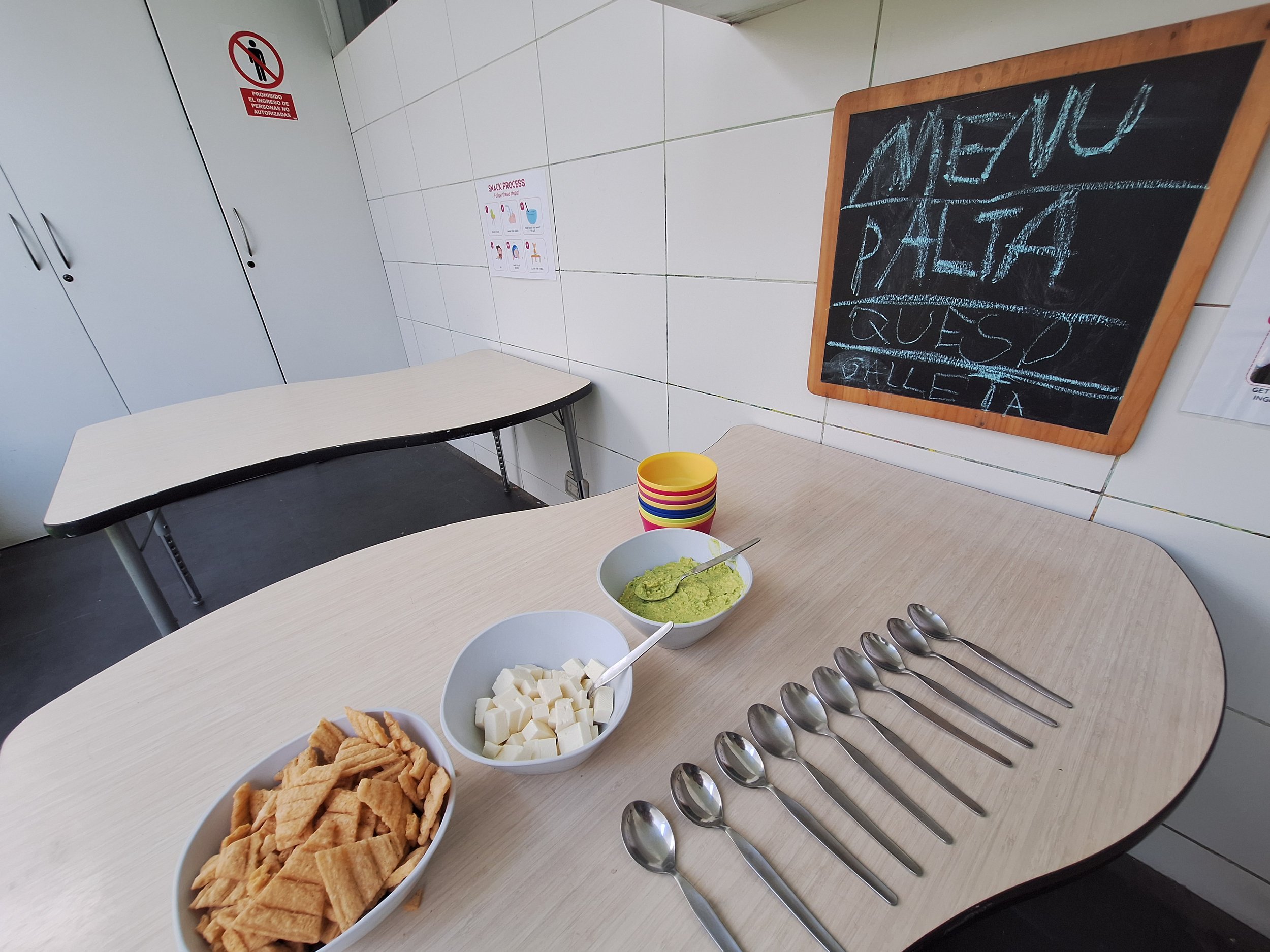
They set up the snack so that even the youngest Pumas can serve themselves with confidence and autonomy. They use real dining ware and take responsibility for cleaning up afterward. In this way, snack time goes beyond nourishment and becomes a holistic learning experience.
Today, the tribe’s challenge is to find balance: serving reasonable portions, respecting turns, caring for the shared space, and not interrupting others as they eat. They will get there with practice. They will learn to care about leaving enough for everyone.
Through this ritual, the tribe practices self-regulation, becomes more attuned to signals of hunger and fullness, and strengthens their connection with their own bodies. Snack time thus becomes both a personal and communal practice, where caring for others is also an expression of affection.