
By Giannira Giunti
Every tribe develops its own rhythms, habits, and agreements over time. These systems help the community run smoothly, but they can also become so familiar that people stop questioning them.
This session, the Pumas had the opportunity to welcome four visiting learners from the United States: Francisco, Gonzalo, Rebecca, and Thomas. While they joined the tribe for only a short time, their presence brought something valuable: new perspectives. At first, the exchange appeared in simple ways. Learners shared games, practiced English during conversations, and discovered similarities and differences in how they approached challenges. But some of the most meaningful moments emerged when familiar assumptions were questioned.
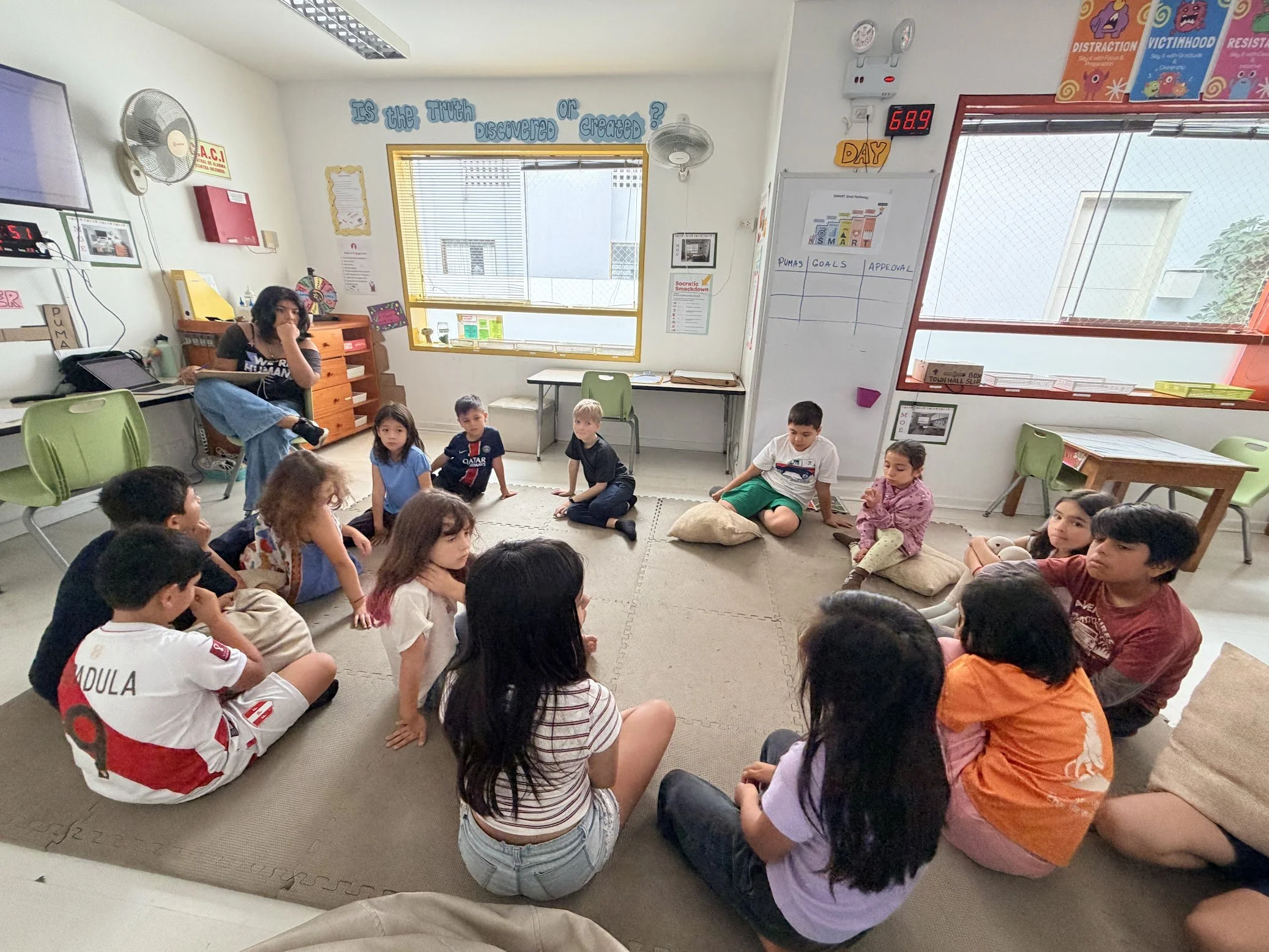
One of these moments began during a discussion about launches (morning discussions). Rebecca shared that in her experience, some learners find it easier to focus when they have small fidgets in their hands. This challenged the agreement of “hands off” during discussions. This idea immediately sparked disagreement and curiosity. Could someone be focused while moving their hands? What does a focused meeting actually look like? How can we tell when someone is paying attention? Do all learners show focus in the same way?
What started as a conversation about fidgets quickly became a deeper exploration of attention, learning, and the assumptions we make about others. The tribe discovered that something that seems distracting to one person might be helpful to another. Rather than searching for a simple answer, learners practiced observing, questioning, and considering multiple perspectives.
Another rich discussion emerged. The tribe had an existing agreement: learners who arrived late would not join the morning launch, helping prevent interruptions during discussions. It was a system that many had accepted without much debate.
Rebecca offered a different perspective."What if it's not my fault?" What if there is traffic? What if a parent is running late? What if circumstances outside a learner's control prevent them from arriving on time? Suddenly, the conversation was no longer just about being late. It became a discussion about responsibility. Can we be responsible for something we did not cause? What actions are within our control? How much responsibility do we have for preparing ahead of time? What happens to a community when exceptions are made? How would a discussion feel if learners were entering one by one after it had already begun?
The tribe explored these questions from many angles. Rather than defending a rule, learners examined the purpose behind it. They considered the needs of the individual and the needs of the group. They imagined different scenarios, challenged one another's ideas, and reflected on the consequences of different choices.
Sometimes learning happens when we master a skill. And sometimes learning happens when someone asks a question that makes us see something familiar in a completely different way. This Session reminded us that welcoming new people into a community is about more than sharing a space. It is an opportunity to exchange ideas, challenge assumptions, and discover that there is often more than one way to understand a problem.