
By Ines Kudo
One of my favorite moments in Ascend is sitting down to read the reflections our Pumas write after finishing a book.
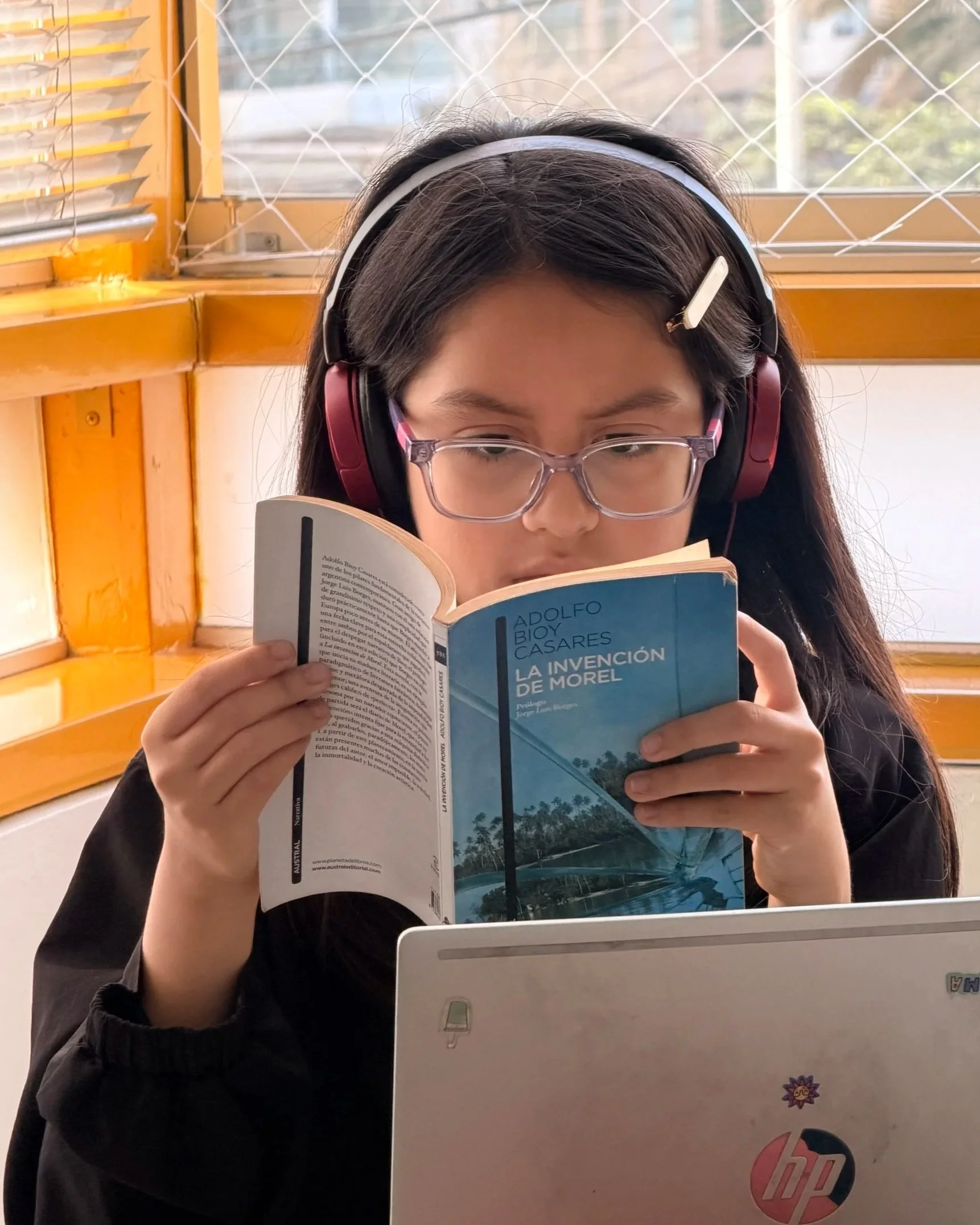
These are not the traditional school book reports written to prove you understood the plot. Written as book reviews, they discuss authors, characters, arguments, writing style, and ideas, but most importantly, they explore how the reader was changed by the experience.
What I find beautiful is that these young teens are becoming increasingly aware of themselves as readers.
They notice what captures their attention, what confuses them, what changes their mind, and what questions stay with them long after they close the book.
They are learning that reading is about understanding what an author wrote, and also about understanding who they are becoming in the process.
Camilo recently finished Hidden Potential by Adam Grant. He thinks of himself as not an avid reader, yet his lesson is to rethink how he feels about reading.
"I do not like reading too much, but this book was built in a way that makes you enjoy it even if you hate reading (not that I hate it but I do not enjoy it). This book made me think again (another great book by Adam Grant) about reading, because I enjoyed this book so much. It was fascinating. Almost every time he added a new term or told a new fact, Adam Grant would also tell another story about a person implementing that principle."
Camilo wasn't only paying attention to the ideas. He was paying attention to how Adam Grant builds them as a writer.
Guillermo had a similar experience with Measuring Poverty Around the World. This is such an unusual choice for an 11-year-old!
"When I started reading this book, at first I thought it was boring and I didn't understand it. But then I got hooked. I started understanding the graphs and looking more carefully at the research. This book didn't just help me understand poverty. It also helped me understand the graphs and the research that were included."

He notices a change in himself as a reader. He now sees himself as someone capable of reading graphs, interpreting research, and staying with a challenging text until it makes sense.
Lucía's reflection on Viktor Frankl's Man's Search for Meaning (another powerful choice for such a young person) also goes beyond summarizing a book.
"This book taught me the importance of appreciating what we have and the people we have in our lives. [...] For me, this is the most interesting and important book I have read so far because it teaches me about the things that can happen in life, but not so that I'm afraid of what might happen, but about how to overcome it."
She uses Frankl's ideas as a lens to start thinking about life itself, and her own inner strength. The book is a seed for her character development.
Leyla's reading journey shows something else I love seeing happen. After reading The Apology of Socrates, she realized she wanted to continue exploring philosophy. That curiosity led her to Sophie's World. She describes how her expectations changed.
"First I thought it would be an interesting novel involving some fiction and some questions related to philosophy but it turned out to be a book that would question the whole world and help you understand it. [...] I would describe the experience of reading this book as a journey through time and ideologies helping me start to create a part of my own opinion."
Through their book reviews, Pumas ask themselves and share questions that matter to them.
"This book has made me go through many different questions [...] (Why are we here? Who are we? Do we have a purpose? How was the world made?)."
Mayu finished The Omnivore's Dilemma and found himself looking differently at something he encounters every single day.
"The Omnivore’s Dilemma was one of the best choices I could’ve made, because after reading this exceptional book I have a clearer insight on food: not only what it actually is, but how it is produced and its actual impact on the world."
I wonder how many of his future decisions about food will trace back to this book.
Now that our Pumas are a bit older, some are choosing to go back to powerful books that they enjoyed as children (barely two or three years ago).
I loved reading how they see themselves as different people, mature readers, and in turn, see the same book with fresh eyes and new understanding.
Sofía writes about The Invention of Morel:
"The last time I read this book, I understood the story as just another story. It didn't seem that special. But now I understand other things, like the man's desperation when Faustine doesn't listen to him, or the feeling of being ignored, which happens to me quite often, or even the feeling of being invisible."
She then quotes one passage that impacted her deeply, and explains why.
"Those lines really resonated with me because they express so many emotions at once: the desperation of being ignored, the love the man felt for Faustine, and also the mystery of not knowing what is happening."
The emotions that once passed unnoticed suddenly felt familiar because she had accumulated more life, more experiences, and more empathy. And she knew it.
Giulia had a similar experience when she reread Animal Farm. Now 12, she remembers reading it when she was nine years old.
"If you read it as a kid (like I did at 9 years old), you would understand that this book is a simple book about animals and bad things pigs do, but if you read it when you are more mature, you will understand that is a book about dictatorship, social placement, corruption, and a lot of complicated subjects into the politics topic."
Her curiosity didn't stop there.
"I investigated and Animal Farm’s political context is a direct allegory of the Russian Revolution, something that is very interesting, and this book helped me understand how the Soviet Union manipulated people."
She was no longer reading the same story she had read years before.
When our Pumas read or reread a book, they are also reading and rereading themselves. They connect books with one another, notice ideas they once missed, see themselves in a different light, and recognize how they have changed. I love that they can see that happening.
As I read these reflections, I see young people who are becoming more thoughtful readers, more curious learners, and more reflective human beings.
To me, that is one of the greatest gifts reading deeply can offer.