
By Rosa Torres
Last Tuesday, the Spark Studio engaged in a dialogue about body care. The objective was simple yet meaningful: to help children recognize their own body sovereignty, and express, in a concrete way, what types of contact feel comfortable, uncomfortable, or context-dependent.
Through a dynamic activity using colored paper, valuable reflections emerged from the children. And their families, who joined us to observe during a Parents Coffee, got to see the process first hand.
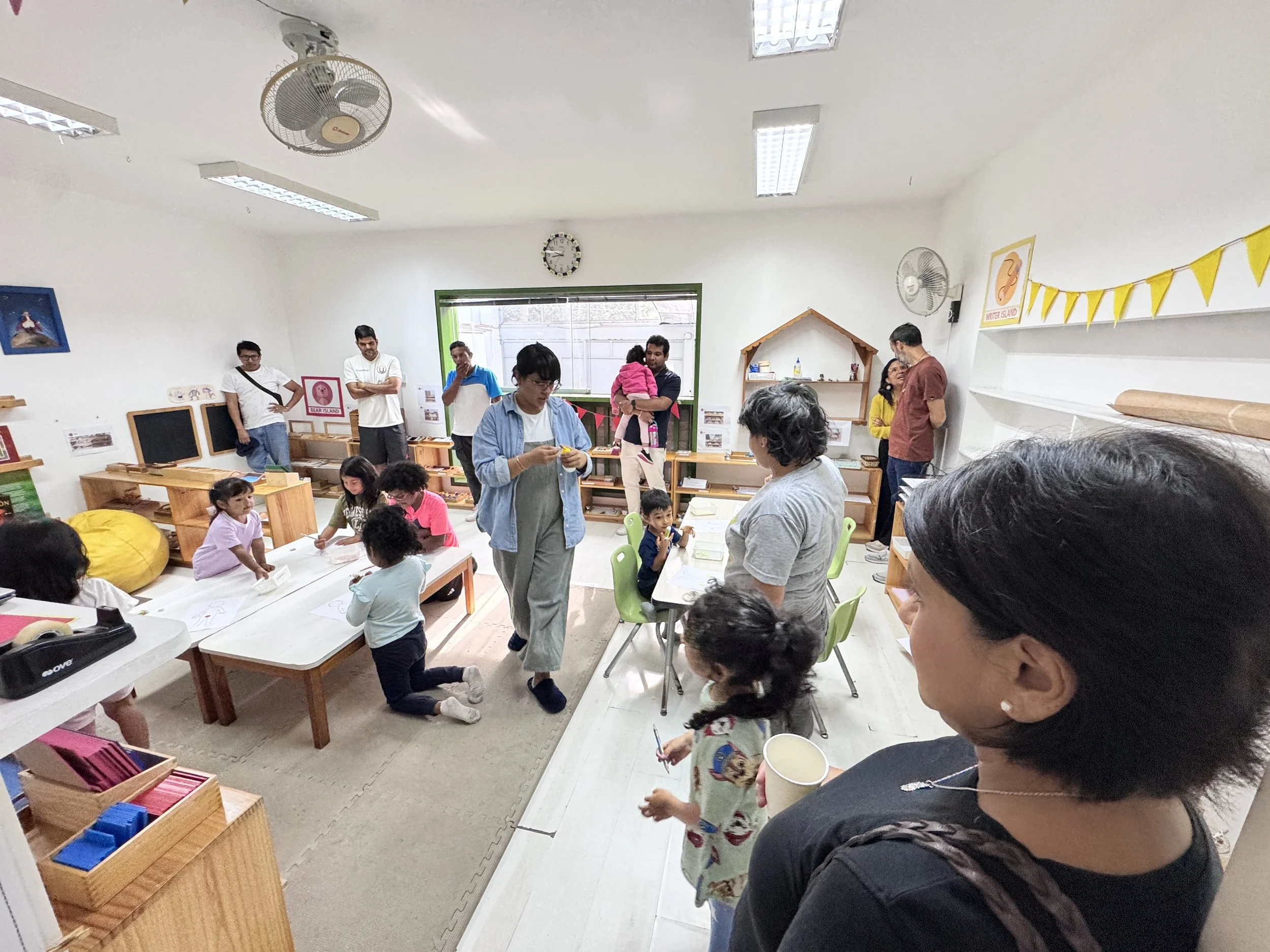
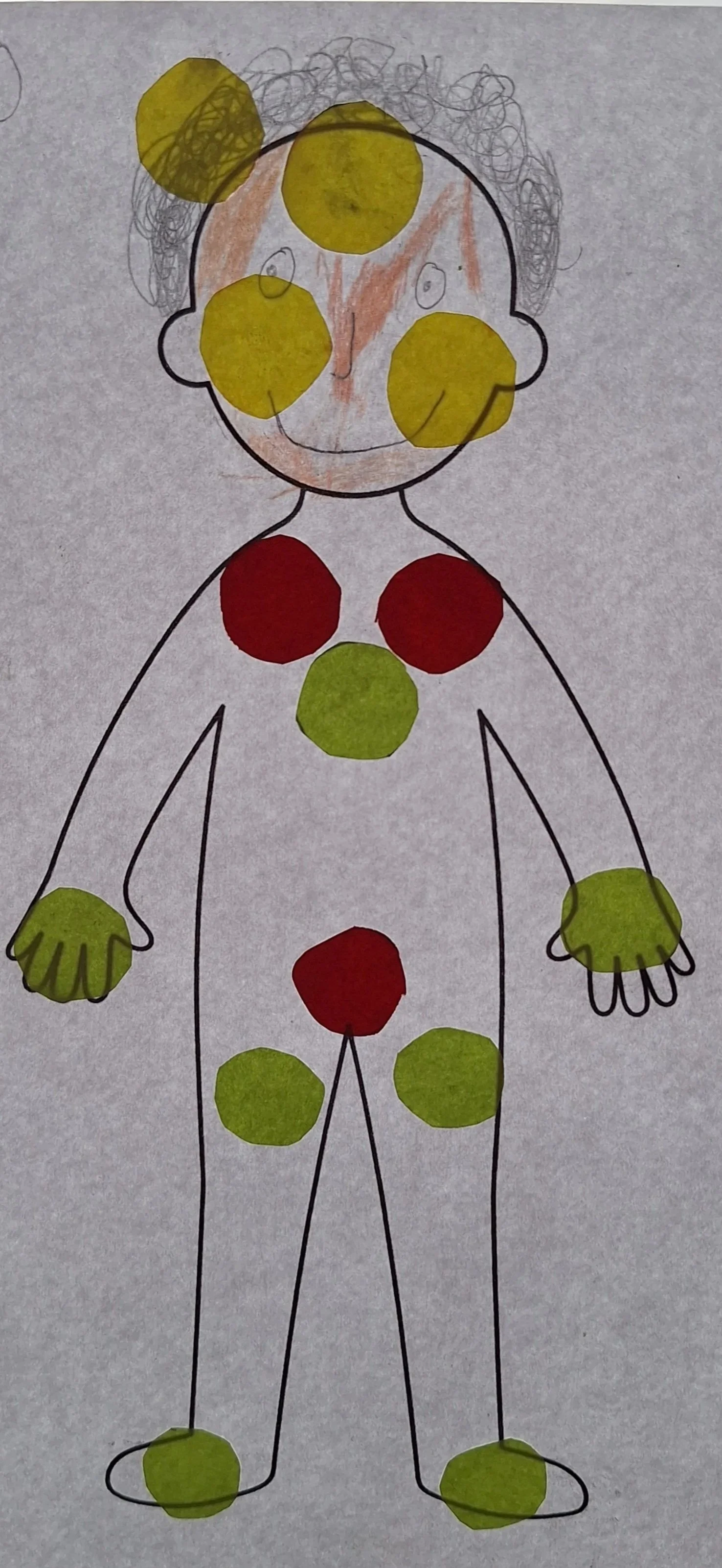
The activity involved using three colors and a template with the silhouette of the human body. The invitation was to use red stickers for body areas that they did not like others touching, green for those where they feel comfortable with contact, and yellow for areas where consent depends on being asked first.
This classification allowed us to introduce, in an accessible way, the ideas of consent, bodily autonomy, and respect for personal boundaries.
I was quite amazing to see what it revealed. For example, one Puma placed a yellow sticker on her hair. When explaining her decision, she shared that sometimes she likes her hair to be touched, but only if she is asked beforehand. And so, we talked about asking first as a key practice: “Can I touch your hair?”
These simple yet explicit formulations become essential tools for building respectful relationships from early childhood.
Another meaningful moment occurred when a Puma placed red stickers on his cheeks. He does not like his face being touched. This sharing prompted a reflection from his mom, who came to better understand his son’s reactions to kisses on his cheek.
This activity reminds us that children have a clear perception of their bodies and their boundaries, even if they do not always have the language or the spaces to express it. By providing visual and symbolic tools like these templates, we facilitate the communication of something that might otherwise remain invisible.
Working on consent from an early age not only contributes to immediate emotional well-being, but also lays the foundation for healthier relationships in the future. Learning that they can say “no,” that their body belongs to them, and that their decisions should be respected strengthens their self-esteem and sense of agency.
Likewise, learning to ask and to respect another person’s “no” is a key social skill.
Talking about body care with children is not only necessary—it is urgent. Creating spaces where they can identify, express, and have their boundaries respected is a concrete way of ensuring protection and promoting their rights.
Tuesday’s experience made one thing clear: children have a lot to say about their own bodies. The question is: are we willing to listen and engage in these “difficult” conversations?