
By Ines Kudo
I recently finished reading Angela Duckworth's new book, Situated. She's the author of the famous, groundbreaking book Grit, and the successful TED talk on the same topic, both of which championed “passion and perseverance towards long-term goals.”
Ten years later, Angela came to realize that grit is necessary for success, but not enough. Our situation matters. The people around us matter.
She argues that we have agency to change some of the things that shape our situation: our physical surroundings, the people we spend time with, the mentors who guide and support us, and, as we grow older, the places where we choose to live and work. As parents, we have agency to shape our children's situations too.
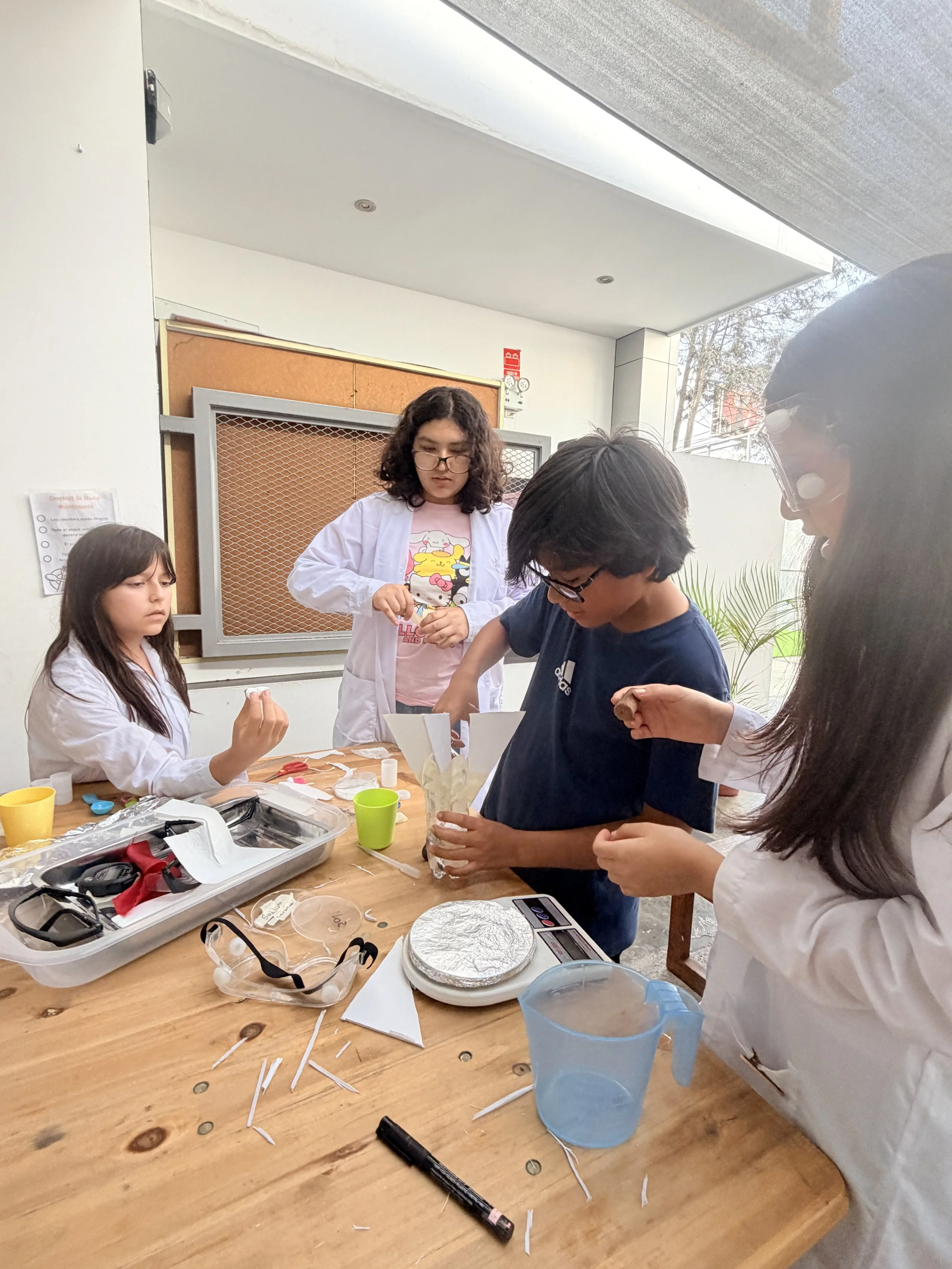
I truly believe that the parents who chose Tinkuy have situated their children for success: among peers, mentors, and a culture that encourages them to become their best selves while making them feel appreciated, cared for, and loved.
Today, I want to share one story that, to me, captures the power of that environment.
Last session, Ascend took on a seemingly impossible challenge: launch a rocket four vertical meters or higher, with a 10-second delay, using acids, bases, and other compounds.
I knew the Quest was demanding, and I told the Pumas the truth: I had no idea whether it would work, but I couldn't wait to see them figure it out.
The first week, every team failed. Nothing lifted off. I watched them go through it, expecting disappointment and discouragement.
Instead, they finished the week thrilled, and came back the next week curious and determined to keep trying.
And they failed again. And again.
Pumas from other studios gathered around to watch. So their failure was public.
Then, one rocket launched. There was no 10-second delay, but the Pumas jumped for joy. Their happiness was so real.
Slowly, the small rockets started working.
More challenges piled on: raise the temperature, neutralize the pH, reduce fuel costs, improve the design. Finally, when they had all managed to launch their rockets, they were asked to scale everything up to a 3-liter bottle.
The big rockets would not launch. And the next day, came the exhibition.
Parents were waiting at the “launchpad.” The Pumas were late, busy finalizing details in their studio. Then, they came down and began presenting… from behind the audience. One after another, seemingly oblivious to their parents twisting and turning in their seats. There was a speaker, but they forgot to bring the mic, so the parents struggled to hear them.
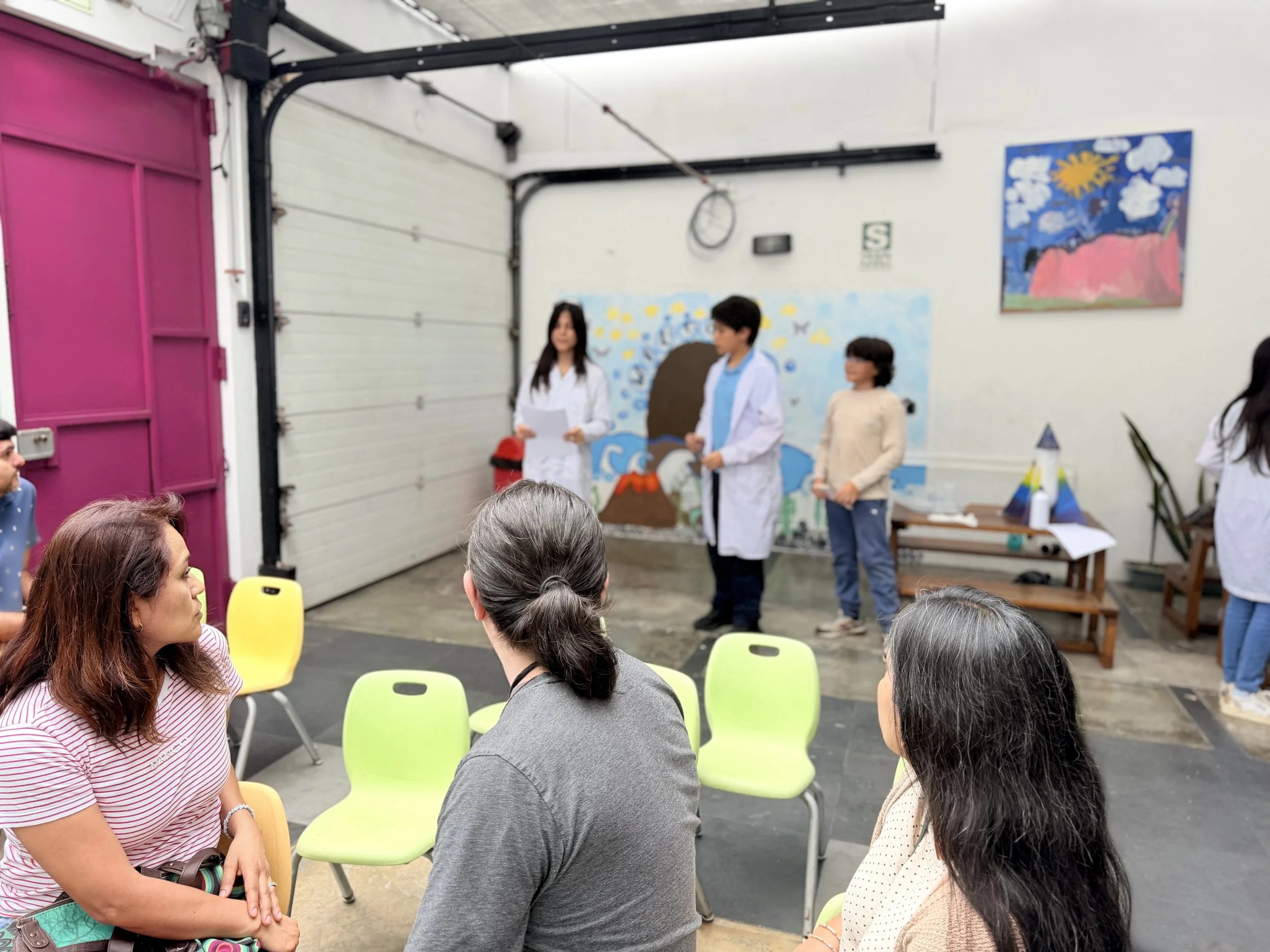
Just as the time to launch was up, their rockets began falling apart piece by piece. They taped, adjusted, troubleshot, and rebuilt while the parents patiently waited.
It was the messiest exhibition yet.
Alpha Team stepped onto the launchpad with their rocket pieced back together.
10-9-8... 3-2-1!
Nothing.
We waited longer. Nothing.
The team picked up their rocket. Still, no other team was ready.
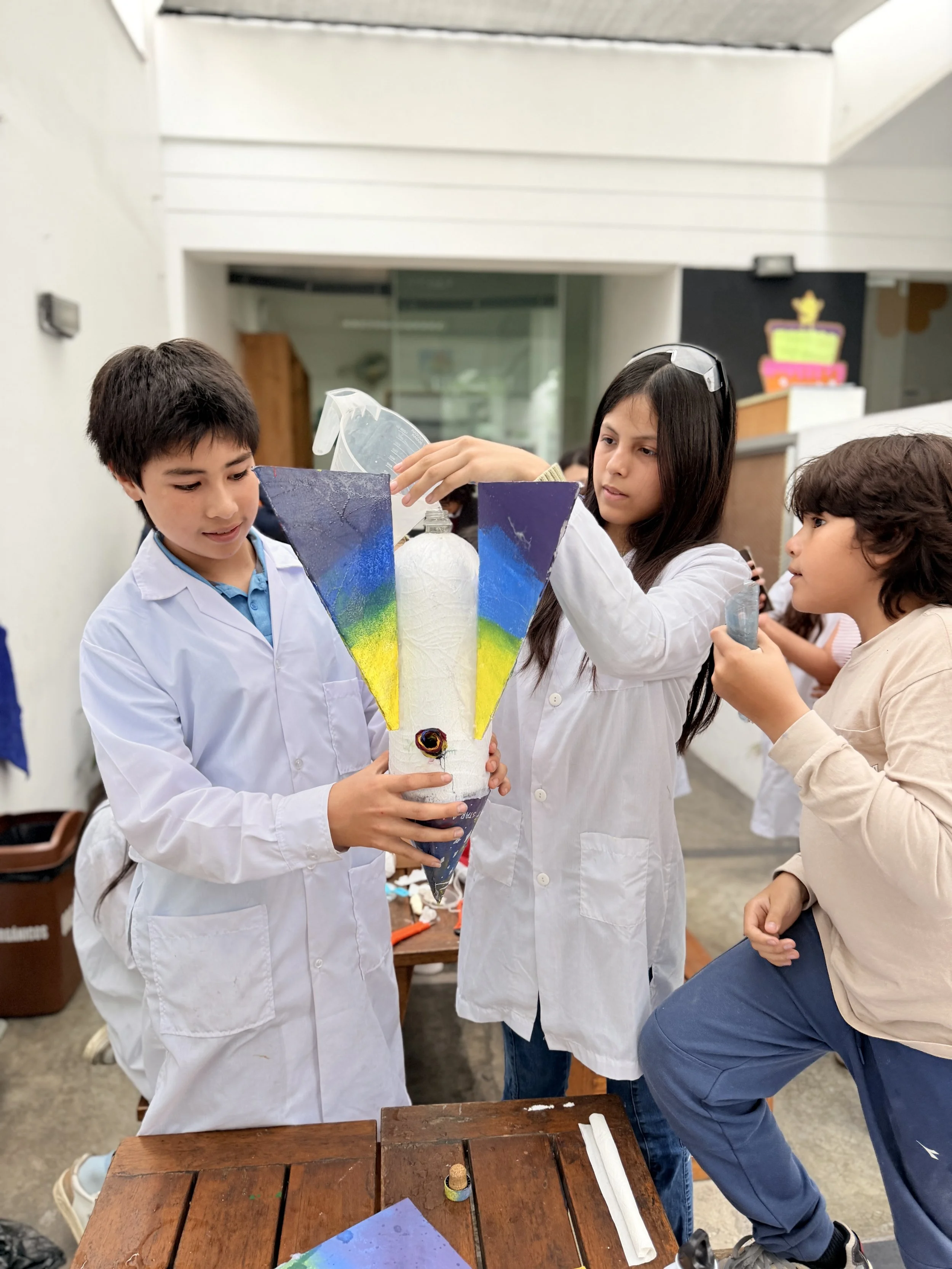
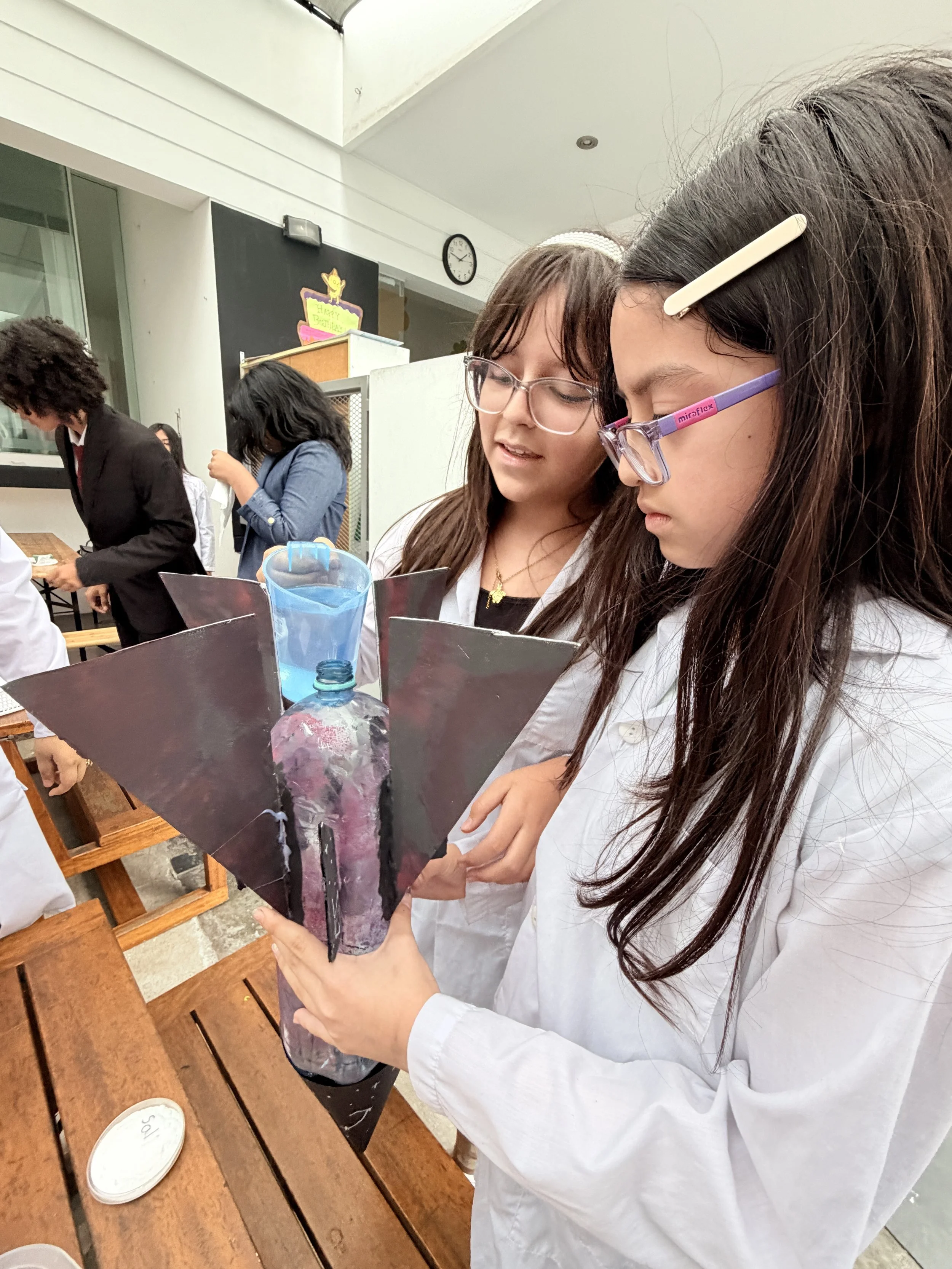
Camilo, Alpha Team's leader, stepped back in while the other teams fixed their rockets, and said: “I'm going to try to explain why I think our rocket failed.”
He proceeded to give a remarkably scientific, chemistry-based explanation, drawing on physics and common sense as well.
Seeing the other teams still frantically rebuilding their rockets, Alpha Team offered to launch their “backup”, the smaller version. This was a total improvisation to fill in the gaps.
This time, it launched… a few centimeters. But they were so happy.
Charlie Team had lost their leader that week, but they were determined. Seeing them struggle, Bravo Team lent them a hand with the tape. Ultimately, their rocket leaked and did not lift off.
Then Bravo Team came in with a rocket taped all around and sloping to one side.
They placed it on the launchpad.
10-9-8... 3-2-1!
Nothing.
Then, 38 seconds in...
Whooooshhhhh!
It took off, flew over the wall, and out to the street. I felt the “fuel” splash all over me as I tried to capture the action on video, my eyes burning from the vinegar.
It was not a 10-second delay, but they did not care. They were ecstatic.
Despite all the chaos, improvisation, confusion, and obstacles, and despite the fact that no team successfully completed the mission, the Pumas stayed engaged, resourceful, and supportive throughout.
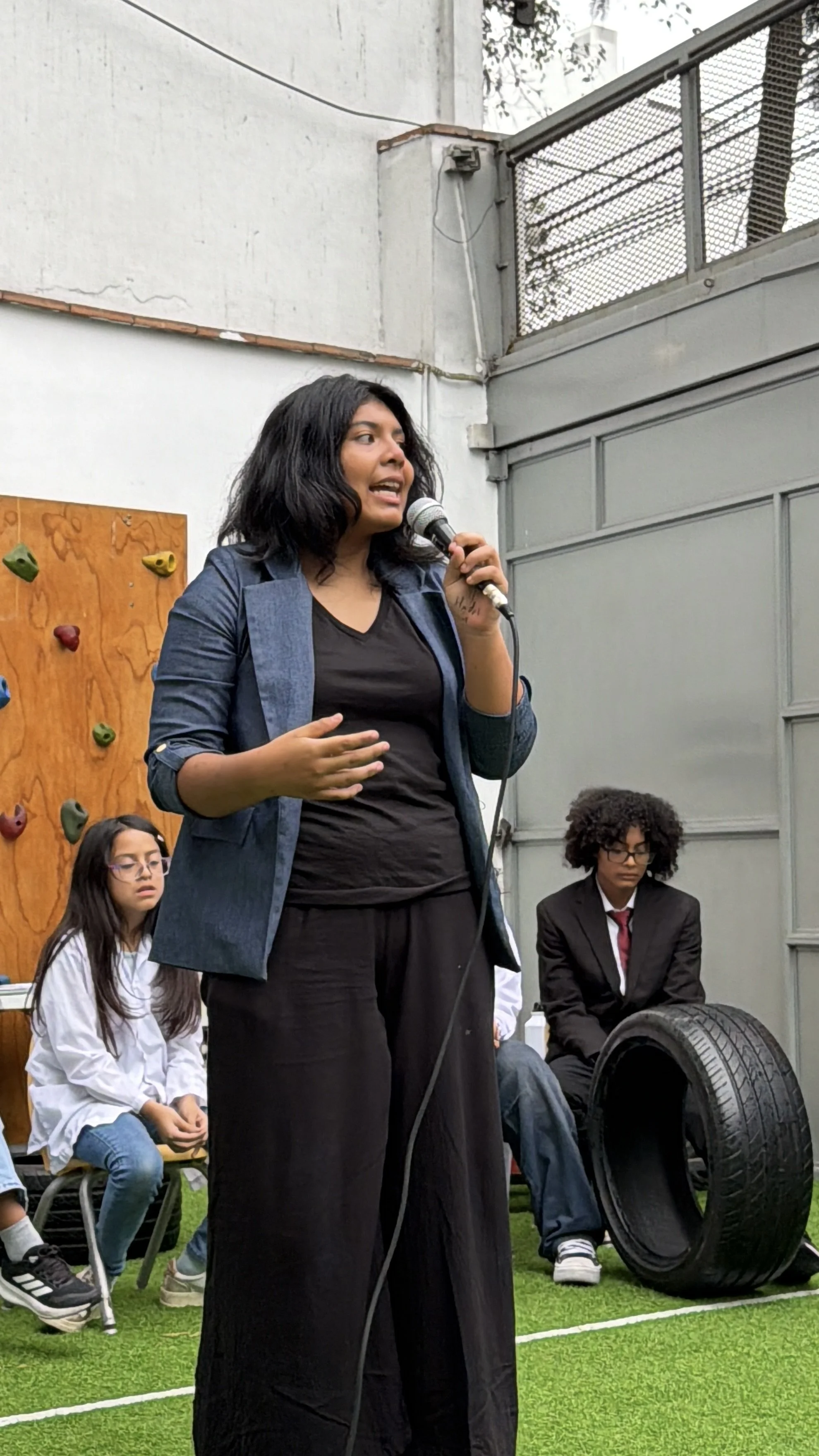
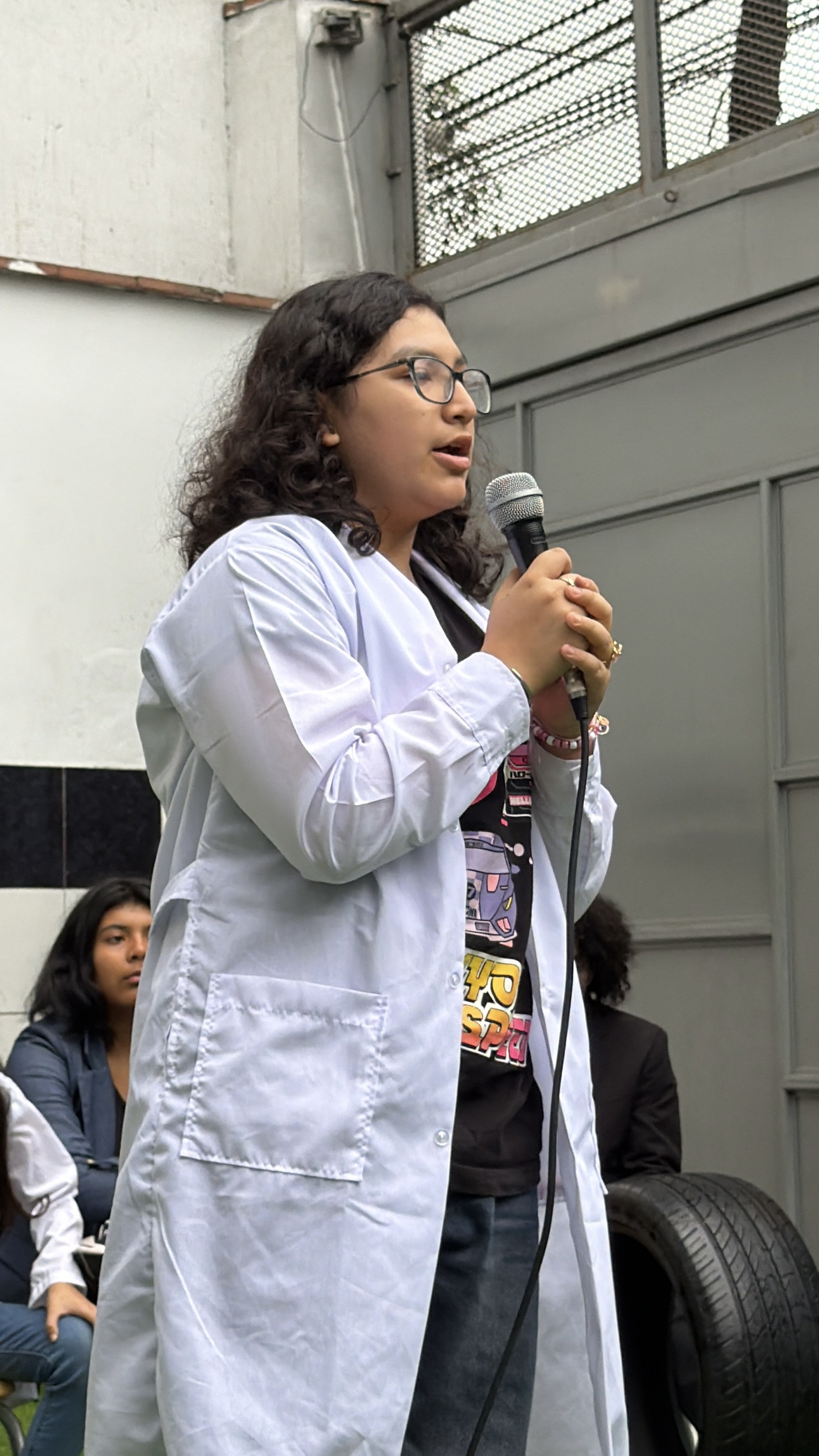
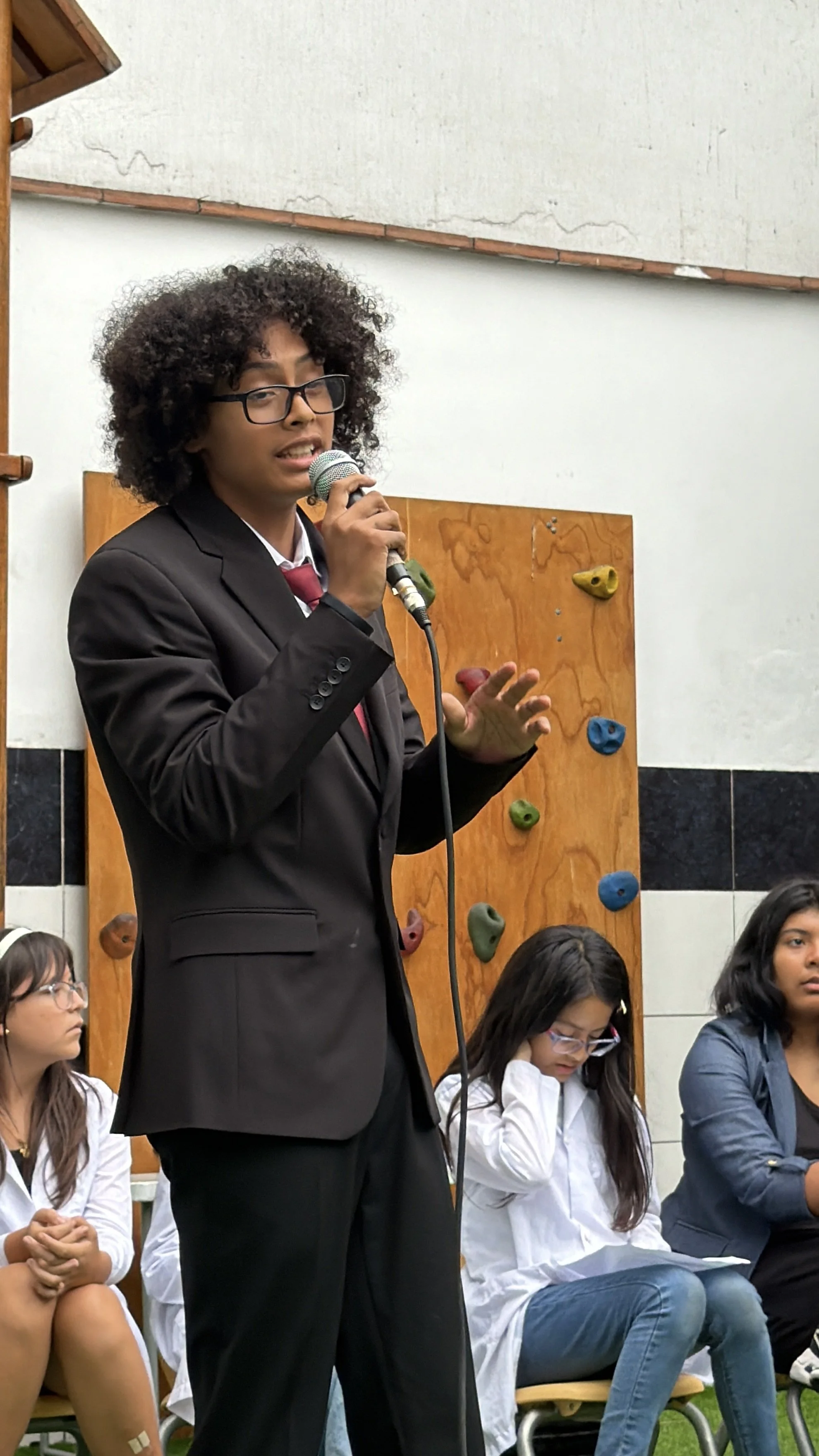
At the end of the exhibition, a parent asked them such a powerful question: “What decisions did you make this year that got you to where you are today?”
I was taken aback by their candid answers.
First, one learner stepped forward:
“I decided to care. And that made all the difference. This year I actually cared about these things, and for me caring means also learning. Because before I cared, but not as much as I do now.”
I had seen this learner struggle for years. Then, this year, she gained confidence, pushed through and delivered. And here she was, stepping out of her comfort zone to learn the chemistry behind the challenges, something she had been tempted to avoid whenever possible. No more.
Then another jumped in:
“This year I made the decision NOT to care. My philosophy was that if something goes wrong, it doesn't matter, I've learned something already. All of it is progress for later on in life. I had zero expectations from this, and I thought if it didn't work I would be happy with what I learned.”
I had seen this learner struggle when things did not turn out perfectly, and fight hard to keep it together. And here he was, with his rocket falling apart, enjoying the process with his team and treasuring what he was learning from failure.
Finally, one more stood up:
“I decided to not give up. I tend to give up on lots of things, but this time I decided to not give up, and work well with my teammates, listen to their ideas and actually help in this project. We launched really high multiple times in our tests. We are very proud, even if it didn't work out today. We worked really hard on our design.”
I knew this learner had overcome quite a lot to be here. I had seen her disengaged, scared, conflicted, not showing up consistently. And here she was, supporting her team, doing her best, troubleshooting one problem after another without their leader, surrounded by girls who encouraged each other not to give up.
I think sometimes not caring or giving up is how we protect ourselves from failure, disappointment, or hurt when we feel that no matter how hard we try, the odds are stacked against us. Breaking that pattern takes not only grit, but also a supportive culture, peers, mentors and family.
And caring too much can be a way to protect ourselves as well. We give it our all because failure feels like proof that we are not enough. I have been there. It took me decades, and some distance, to learn that I don't always have to care so much . I am still working on it.
And so, to me, it is a gift to see our Pumas learn these lessons on their own, way sooner than I did. I’m in awe of how powerful their insights are already at 12 and 13 years old.
They are learning to persevere, to seek mentors and become mentors themselves, and to build teams and relationships where they can thrive.
Maybe that is the real goal: not just to give them a situation that helps them thrive, but to give them the agency to create one for themselves.