
By Natz Vieira
“In 2019, a study conducted by specialists from Cayetano Heredia University estimated that the number exceeded 6 million. Of this number, 4 million were believed to be in Lima, according to the Voz Animal project in 2018.”
Medrano, H. (05/14/2023). Homeless dogs and cats in Lima: Is there a record of abandoned animals? El Comercio.
Today, I want to dedicate this blog to Bernardo.
Who is Bernardo? Some of you who still haven’t met him might be wondering.
Bernardo is Tinkuy’s dog. Although, sometimes, the Pumas say he is one more Puma and even debate about which studio he would belong to.
Over the past year, new families have joined the community, and I think it’s important to share a little about Bernardo and how he arrived at Tinkuy.
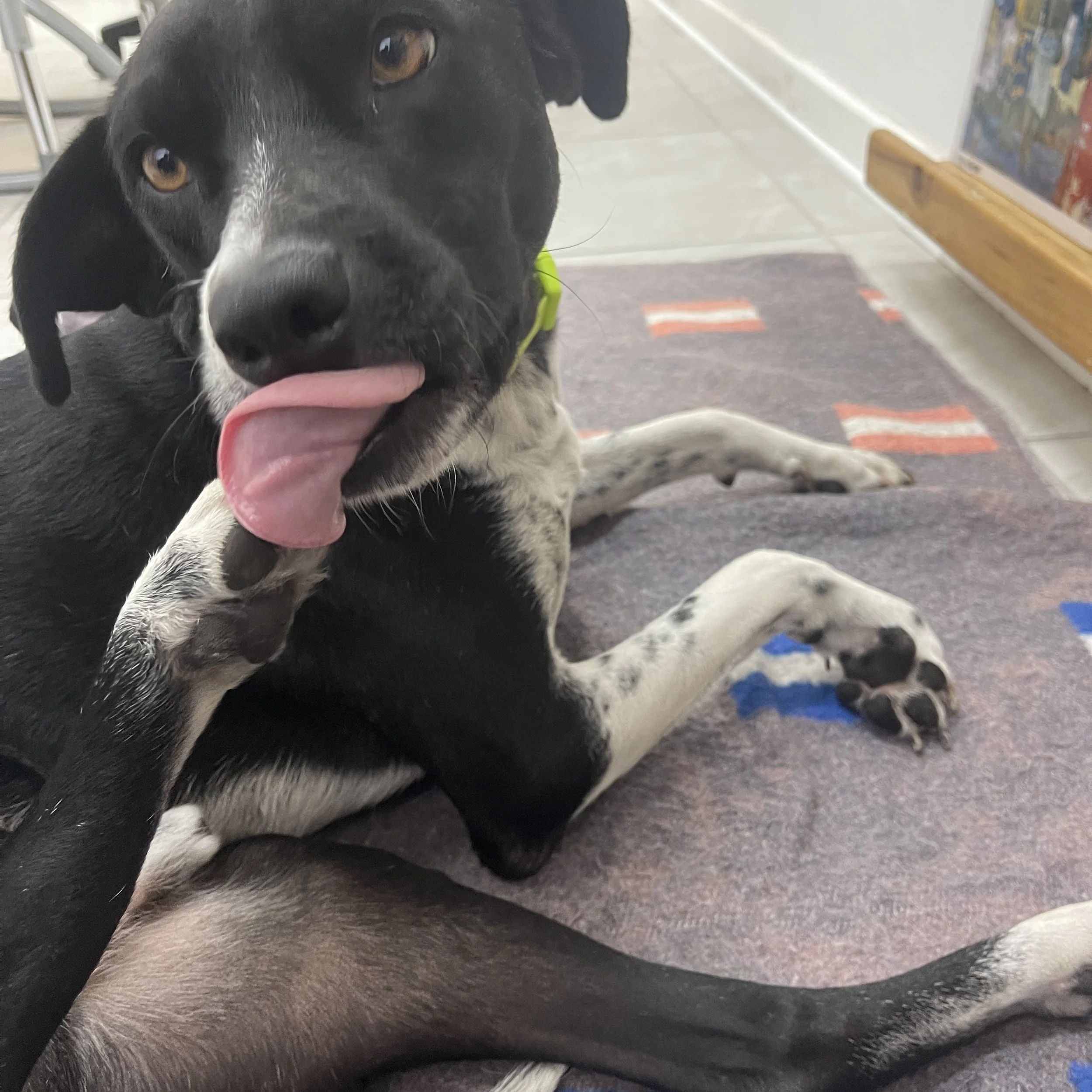
It’s worth mentioning that this story is part of a collection of memories from the people who were here at that time. To write this blog, I spoke with Charo and Inés, and also relied on conversations and memories shared with Pumas and team members who are no longer here.
Bernardo arrived in early 2022. I arrived in 2023. When I started working at Tinkuy, he was already part of this space, wandering around a little wildly, looking for affection and play with the emotional intensity and lack of regulation that a dog who has lived on the streets — and whose story likely crossed paths with the cruelty of abandonment — can carry.
The story goes that Bernardo was adopted after Pitch a Pet, a Quest designed to practice writing, argumentation, and the ability to persuade others. On that occasion, the Pumas had to argue why their studio should have a pet and what kind of animal would be the best fit.
Both the Spark and Discovery studios (parents and Pumas) voted to get a dog. Soon after this, a Tinkuy family found Bernie, who was abandoned near Meliton park.
He doesn’t bark, they told us. And so we thought we could give him a home, and he could become the pet the two studios wanted. So they kept him for a few months until we returned from lockdown to our new (current) campus.
And that is how he arrived at Tinkuy on January 17th, 2022.
It has now been more than three years.
Back then, the community was larger. There were more families, about 60 Pumas, and 6 guides. An entire organization formed around Bernardo: families responsible for morning and afternoon walks, Pumas in charge of making sure he had food and water at certain times, among other tasks. Dog-loving families took turns to take him home for the weekend.
While researching for this blog, I found a chart describing Bernardo as an agile yet slightly clumsy dog, shy, someone you needed to approach slowly.
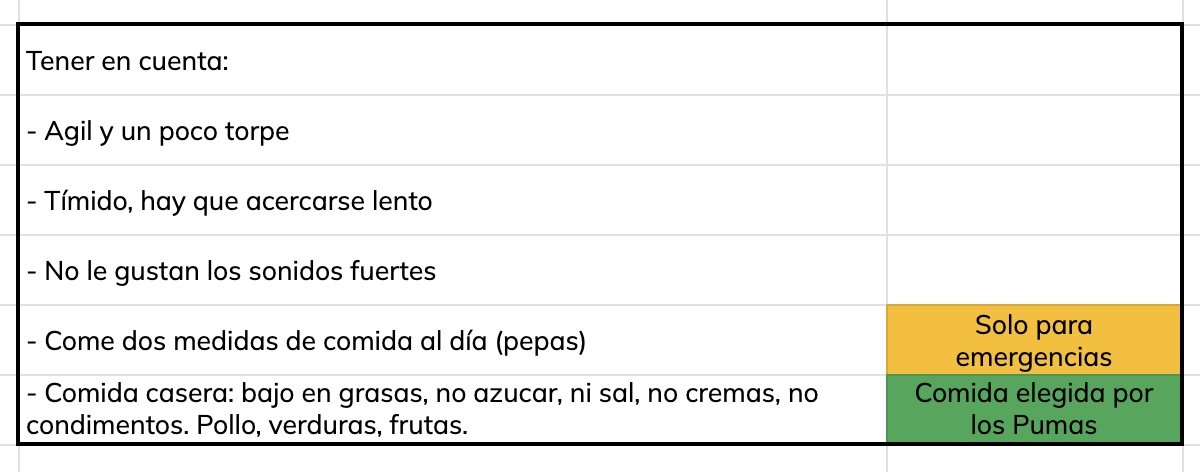
A dog who does not like loud noises.
I think that last part has not changed much. He is still fearful around strange objects, crowds, or sharp loud sounds, like speaker feedback or sudden bangs. I would also add that he has a paralyzing fear of going to the vet.
And it was true: he doesn’t bark. In all the time I’ve been here, I’ve only heard him bark twice — once at a motorcycle helmet and another time at another dog. We don’t really know why, but it is part of what makes him Bernardo.
Tinkuy has also changed over time and, with it, the people who inhabit this space, the dynamics, and the rhythms. All of this affects Bernardo too.
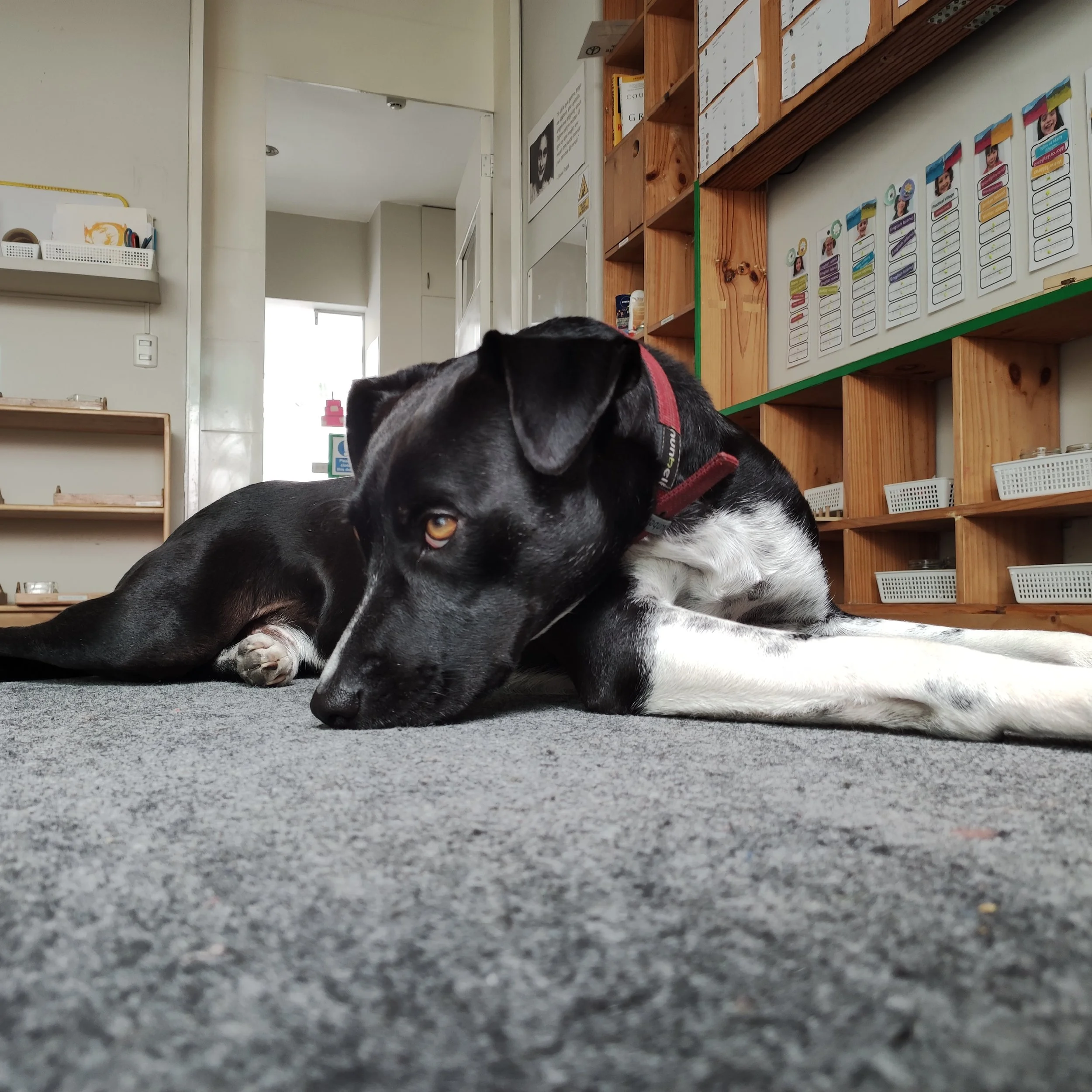
Last month, he began showing behaviors that reflected anxiety. Charo and I took him to the vet, where he received treatment. We don’t know exactly what might have triggered it, but it became an opportunity to revisit other important needs: his weight, his diet, and his overall health.
It also became a starting point for asking ourselves what Bernardo needs and how much of that we are truly able to sustain as a community.
All things considered, I believe Bernardo is a privileged dog. He does not lack food, shelter, a bed, or walks, especially if we imagine what his life may have looked like before arriving at Tinkuy. But we also know his life could be better — that perhaps he could find a family able to give him a fuller life.
Bernie loves running, sniffing around, lying in the sun belly-up, and eating chicken. Here, sometimes, he cannot fully do those things because the spaces are being used by children, or because we try to prevent situations that might make him uncomfortable.
Although he is a gentle dog and very respectful toward children, there are also times when he may feel overwhelmed by those who are still learning how to relate to animals and respect their boundaries.
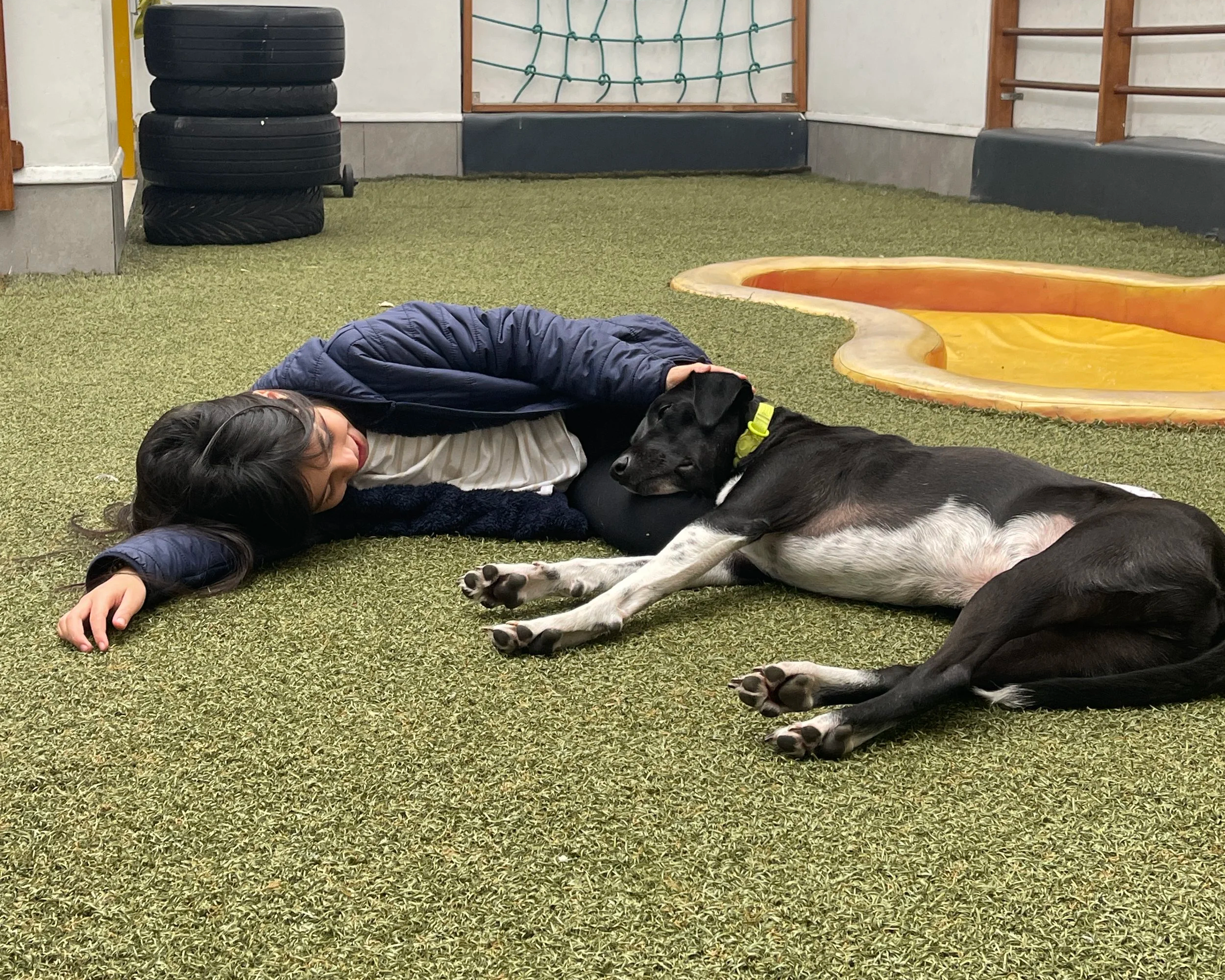
Sometimes I find myself petting him while talking nonsense to him and, suddenly, a Puma appears and joins in. Usually, it’s Xavi. Sometimes we talk about “Babo” — one of the loving nicknames the Pumas gave him— and it becomes impossible not to think about how Bernardo has allowed many children to approach animals through empathy, care, and responsibility. Xavi truly loves this dog and shows him so much tender affection.
On many occasions, Pumas have called me over worried about a scratch or an unusual behavior from Bernardo. Those gestures, I think, reveal the love many of them have for him.
Sometimes we remember his story or reflect on his life, and questions appear:
Who takes care of him on weekends?
Who does he sleep with?
Who does Bernardo belong to?
Bernardo belongs to Tinkuy — to those who participated in the decision to adopt him back then, to those who arrived later, and to those of us who are here now.
Although some people are closer to him than others, this text is also an invitation to think about Bernie and his needs. To give him a pat or take him for a walk.
Because even though Bernardo found a community, perhaps he is still waiting for a home.