
By Fressia Sanchez, Spark Mom
If I have to be honest, I think I arrived at Tinkuy long before my son did.
My journey began when I started questioning many of the ideas I myself had been raised with. I grew up in an environment where academic achievement, grades, and intellectual performance were highly valued, and for a long time I thought that was the most important thing I could offer my son. So when I began researching alternative education, I was initially looking for a way to maximize his intellectual abilities.
However, books like Courage to Grow helped me understand something that now seems obvious, but for me was truly transformative: the goal is not to raise a successful child, but a person capable of building a life with purpose, autonomy, and meaning.
What impacted me most about the book was the trust it places in children. Not a naïve trust, but a trust that accepts mistakes, discomfort, and frustration as necessary parts of growth. That idea continues to challenge me deeply because it touches on one of my greatest difficulties as a mother: wanting to step in too soon.
When I read the book, I see many of my own challenges reflected in it. I see a mother who wants to help, but who sometimes helps more than she should. I see a mother who researches, plans, and prepares environments, but who is still learning to trust when things do not go as expected. I see a mother who intellectually understands the importance of autonomy, but who is still practicing how to live it day to day.
Perhaps that is why one of the phrases that has stayed with me most since discovering Acton is: "Learn to be; learn to do; learn to know." Before, I thought learning began with knowledge. Today, I believe it begins much earlier: in the development of character, autonomy, responsibility, and the ability to know oneself.
It also made me reflect on my relationship with Tinkuy. When we joined, I thought my son was the one who was going to change. Over time, I have discovered that the people changing the most are his parents.
The experience that taught me this most clearly was his adaptation process. If today I see my son walking in naturally, participating in the community, connecting with other children, and feeling that he belongs at Tinkuy, it is easy to forget how difficult the road to get here was. There were moments when I doubted whether we had made the right decision. I worried about his difficulties adapting, conflicts with other children, situations that caused him fear or frustration, and above all, the feeling of not being able to solve things for him.
I remember that many times my instinct was to intervene, protect him, or look for an immediate solution. However, little by little, I discovered that a large part of my own learning consisted precisely of holding that discomfort without rushing the process. My son needed time to build confidence, develop his own tools, and find his place within the community. And I needed to learn to trust him, the guides, and the process. Looking back, it moves me to recognize how much he has grown and how much I have grown as well.
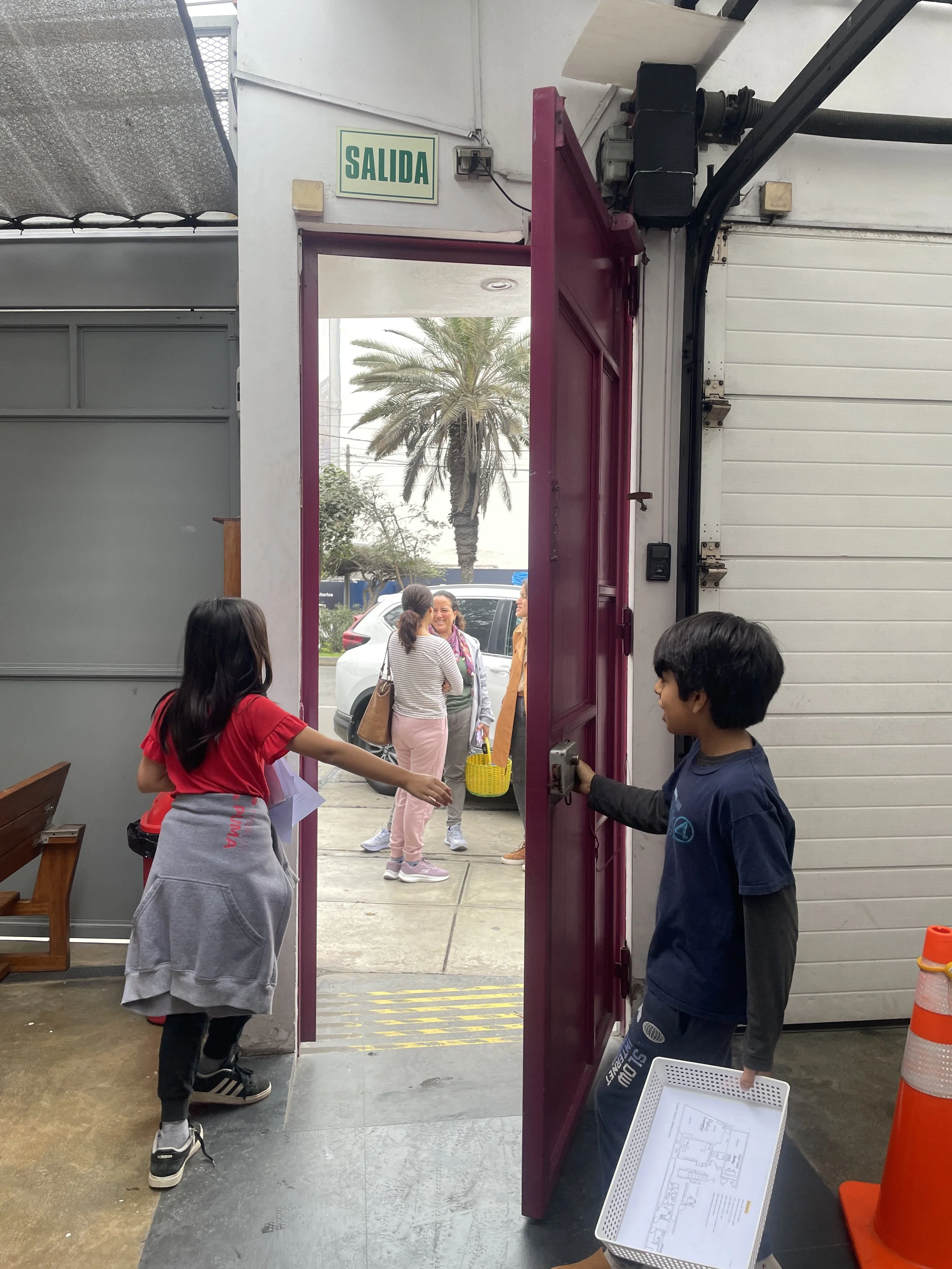
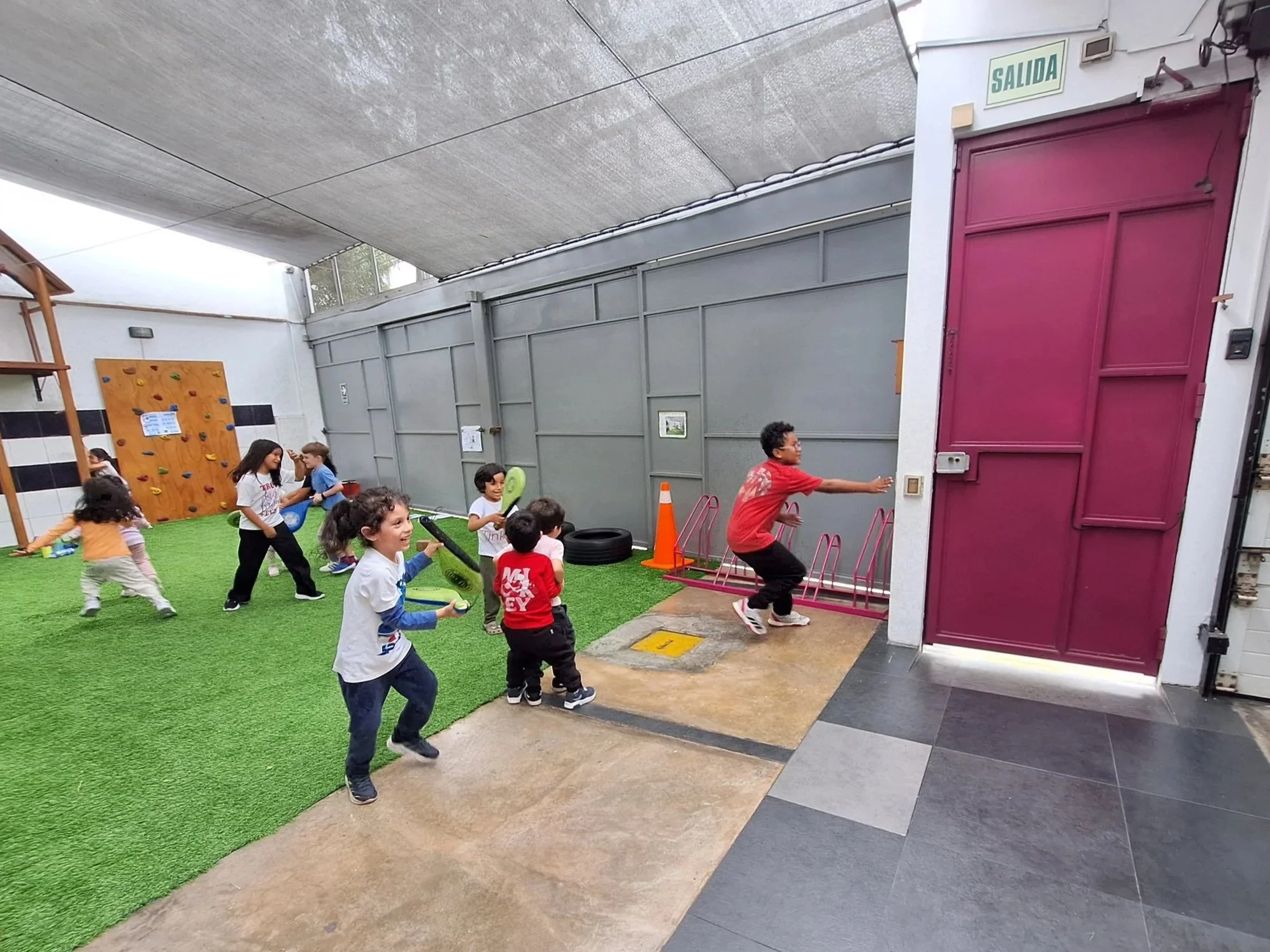
Recently, I experienced a situation related to what I perceived was a safety issue at Tinkuy's drop-off time that led me to reflect deeply. As a mother, my first reaction was to think that we needed to add more safety barriers to those already in place. That concern came from the fact that, at the beginning of his adaptation process, my son struggled to separate from us and, at times, expressed a desire to go back home. His safety is a constant concern for me and, because of that, I instinctively thought about strengthening the physical measures that could prevent a possible attempt to leave and head toward the street.
However, during a conversation with Inés, she shared a reflection that stayed with me for several days. She reminded me that at the beginning of my son's adaptation process, they had to block the door as an extra safety measure because he would try to open it and leave. Today, he no longer does that. Then she added something that deeply moved me: "That is a stronger foundation of safety than relying on a blocked door."
Since then, I have thought a lot about that phrase.
Obviously, security systems and physical boundaries are important and necessary. But I came to understand that there is another kind of safety, a deeper one, that emerges when a child develops self-control, judgment, and the ability to make good decisions even when no one is externally controlling them.
I think that reflection summarizes much of what Courage to Grow has taught me. It is much easier to trust a locked door than to trust a child's growth process. It is much easier to control the environment than to accept the uncertainty that comes with raising a child for autonomy. And yet, the ultimate goal cannot be for my son to always depend on external barriers in order to act safely, responsibly, or respectfully. The goal is for him to gradually build those capacities within himself.
Looking back, I realize that many of the moments that worried me most ended up becoming opportunities for growth, both for my son and for me. I believe that is precisely one of the deepest lessons of Courage to Grow: growth rarely feels comfortable while it is happening. More often, it feels like uncertainty, doubt, or fear. Only afterward are we able to recognize how much we grew because we went through those experiences.
If I had to answer what I will do differently tomorrow at 8:00 in the morning, the answer would be simple: I will try to trust a little more. Trust my son more, trust the process more, and trust more that I do not need to clear the path for him in order for him to walk it.
My job is not to prevent every stumble, but to stay close, accompany him, and believe in his ability to get back up.
And for me, that continues to be the most challenging and most valuable lesson of Courage to Grow.