
By Gracia Dextre
A couple of months ago, I dared to do something I had wanted to do for years, but for which I could never seem to find the time or, I think, the courage.
Let me give you some context.
Matilda, our youngest daughter, who is three, had been expressing quite a bit of discomfort when we went to large social gatherings, mostly family gatherings. She would start by saying she “didn’t want to go” or that she “didn’t want to say hello.”
My husband, Arturo, and I have never insisted that she greet people in a way that makes her uncomfortable. However, in certain social settings, especially with our extended family, we could feel the pressure and discomfort around her not wanting to greet people with a kiss.
We decided to be firm with the adults and let them know, when we arrived at a gathering, that Matilda would wave hello from a distance, with her little hand, because that was what she had told us made her feel more comfortable. But there was always someone who would ask her for a kiss anyway.
This situation frustrated me and made me very uncomfortable. I could see Matilda becoming tense and feeling pressured. Sometimes, she would even end up giving the kiss because of that pressure, despite my reminding her that she didn't have to if she didn't want to.
I felt like something was missing.
I knew my family was very affectionate, and I would always tell myself, “One day, I’ll explain to them why this is important.”
Until I finally found the courage to do it.
I turned on the camera and recorded a three-minute video explaining why respecting the way Matilda wanted to greet people was a way of helping her build a trusting relationship with her own body and learn that she has the right to decide how and when she wants other people to approach it. I also told them that, as her family, we had the opportunity to be her first allies in building this important foundation.
I sent the video to our family group chat.
My daughters’ uncles and aunts, great-uncles and great-aunts, and grandparents watched it.
The result: I brought up an uncomfortable subject and opened up an important conversation.
Some people were grateful for the information and acknowledged that they hadn't realized how important this was. They said that, from then on, they would respect Matilda’s and Lara’s wishes. Others questioned what I shared, but said that even though they didn't agree, they would respect it. And there were those who didn't understand it and, in one way or another, criticized it.
There was a bit of everything. But I know a seed was planted.
Today, Matilda feels much more relaxed when we go to family gatherings. Her uncles and aunts are more mindful of how they approach her. And Matilda knows that her mom and dad have her back.
We definitely don't have all the answers, but we have confirmed that we are now the primary guides and advocates in helping our daughters build a relationship with their bodies in which they can recognize their own wishes and expect their boundaries to be respected.
It is in these small acts that we have the opportunity to shift things, to make a real impact.
I think doing so requires a certain amount of courage. Because doing something that goes against the norm involves a degree of discomfort in two directions: for the person initiating the change and for those who are challenged by it.
And I think that when love and care are at the heart of it, there is a much greater chance of opening up a conversation and building something different.
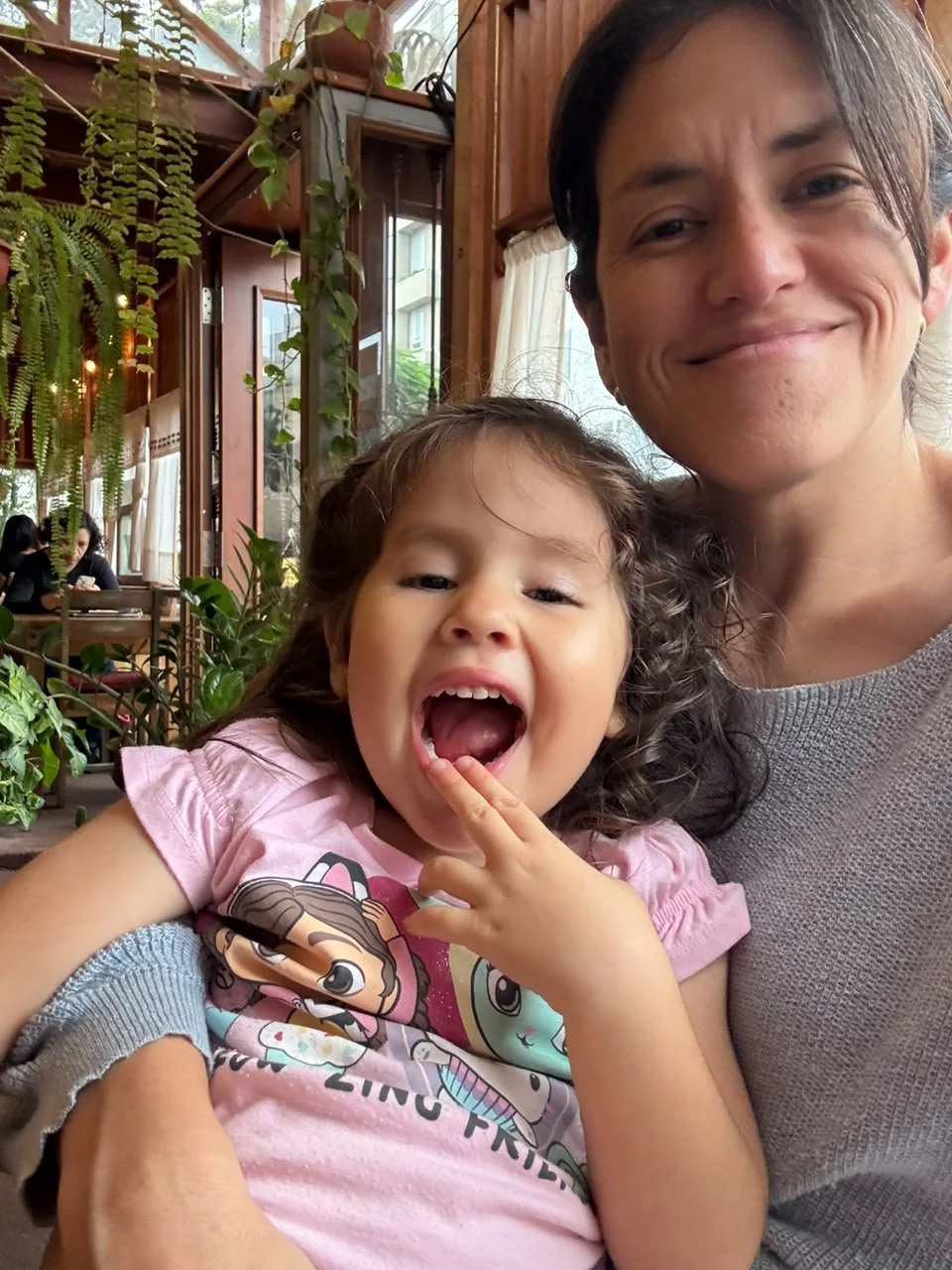
I see now that we have a responsibility to guide our children on this revolutionary path of acting with love, respect, and care. And, whenever possible, to make conscious and courageous moves toward change, allowing our children to see us doing so.
In a world where violence is more normalized than care, I invite us all, and I clearly include myself in this, to make moves that may seem subtle but have the potential to make a huge impact.
For me, these moves begin when we make a conscious space for ourselves to observe, question, and learn. When we approach comprehensive sexuality education (CSE, or ESI, for its acronym in Spanish) with curiosity, seek to understand everything it encompasses, inform ourselves, practice new responses, and find ways of responding that are consistent with what we want to teach our children. And also when we dare to open up conversations that can inspire other families to make their own moves.
Information is power.
Having more tools to help us understand why it is important to establish and respect boundaries around how we approach children’s bodies is a way of giving our children the resources they will need, as they grow up, to care for themselves and the people they love.
Soon, we will have the privilege of coming together to reflect on this topic and take action around something that is part of our everyday lives, even when we don't always notice it.
I feel deeply grateful to be part of a school community that dares to make the moves that are necessary and consistent with the future we want to create for our daughters and sons.
Being part of a community like this isn't luck. It's a choice (and I recognize that it's also a privilege).
And I am truly grateful to be part of it.