By Giannira Giunti
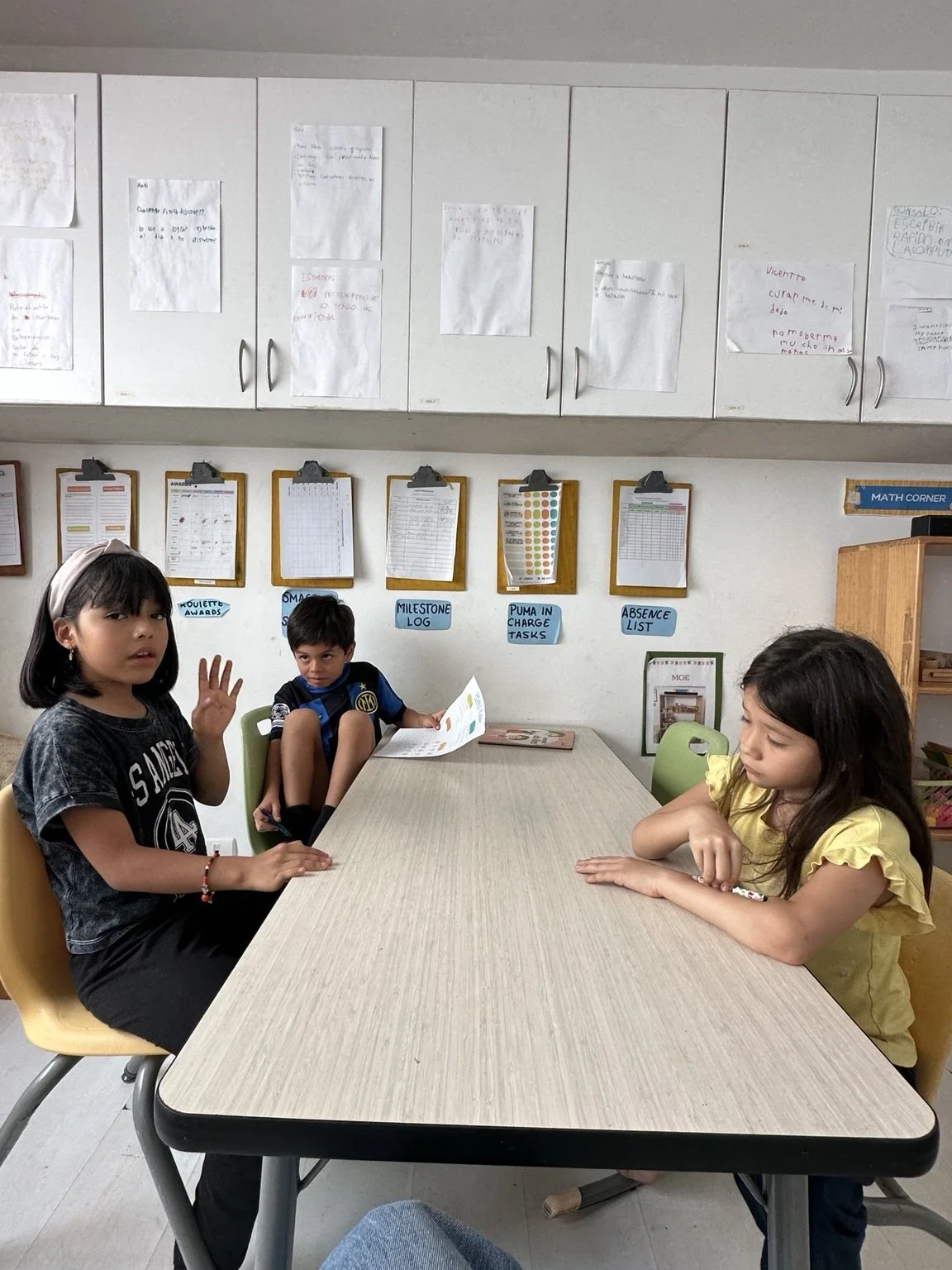
Sometimes, talking about something that bothered us can feel harder than the situation itself. We may worry about how the other person will react, whether they will take it personally, or if bringing it up will turn a small disagreement into a bigger conflict. I have been noticing some of these feelings around the Peace Tables in Discovery. Sharing what was bothering them meant making their thoughts and feelings visible, with the risk that the other person might see it as an accusation or the beginning of a conflict.
I began wondering whether the challenge was really about using the Peace Table, or about what it means to speak up when something does not feel right. Over the past few weeks, we started discussing its purpose. Together, we explored the idea of a Peace Table as a space to talk about something that is still on your mind, something that bothered you, made you sad, or that you have not found a way to express. It is not necessarily about deciding who was right or wrong, but about making room for both people to share their perspectives.
Something seemed to shift when Pumas discovered that they could use the Peace Table with different people, not only within their own studio, but also with Pumas from other studios or even with Guides. This seemed to make the resource feel more natural and less intimidating.
Soon after, we had two Peace Tables in one week. Some younger Pumas even volunteered to lead them, despite not being entirely sure how. Using the template, they took turns sharing what happened, how they felt, and what they wanted the other person to understand. The listener reflected back what they had heard before sharing their own perspective. They then identified the emotions involved and, finally, worked toward agreements about how to move forward. What caught my attention was how this simple structure gave each person time to speak and, just as importantly, the opportunity to show the other: I heard you, and this is what I understood.
I keep thinking about that last part. How often do we listen with the intention of understanding, rather than preparing what we are going to say next? Watching Pumas begin to use the Peace Table has reminded me that having these conversations is also something we practice. It takes courage to bring something up, patience to listen, and openness to consider another perspective. Perhaps the Peace Table is a place to practice how we want to relate to one another.
What makes it difficult to tell someone that something bothered us? How does it feel when someone takes the time to show us they have understood our perspective? And what might change in our relationships if understanding one another became as important as making ourselves understood?