
By Rosa Torres
Last session, the Pumas embarked on a new challenge: designing a playground. The project began with a seemingly simple question: What would the playground you design look like? However, arriving at an answer required them to observe, imagine, make decisions, experiment, make mistakes, and try again.
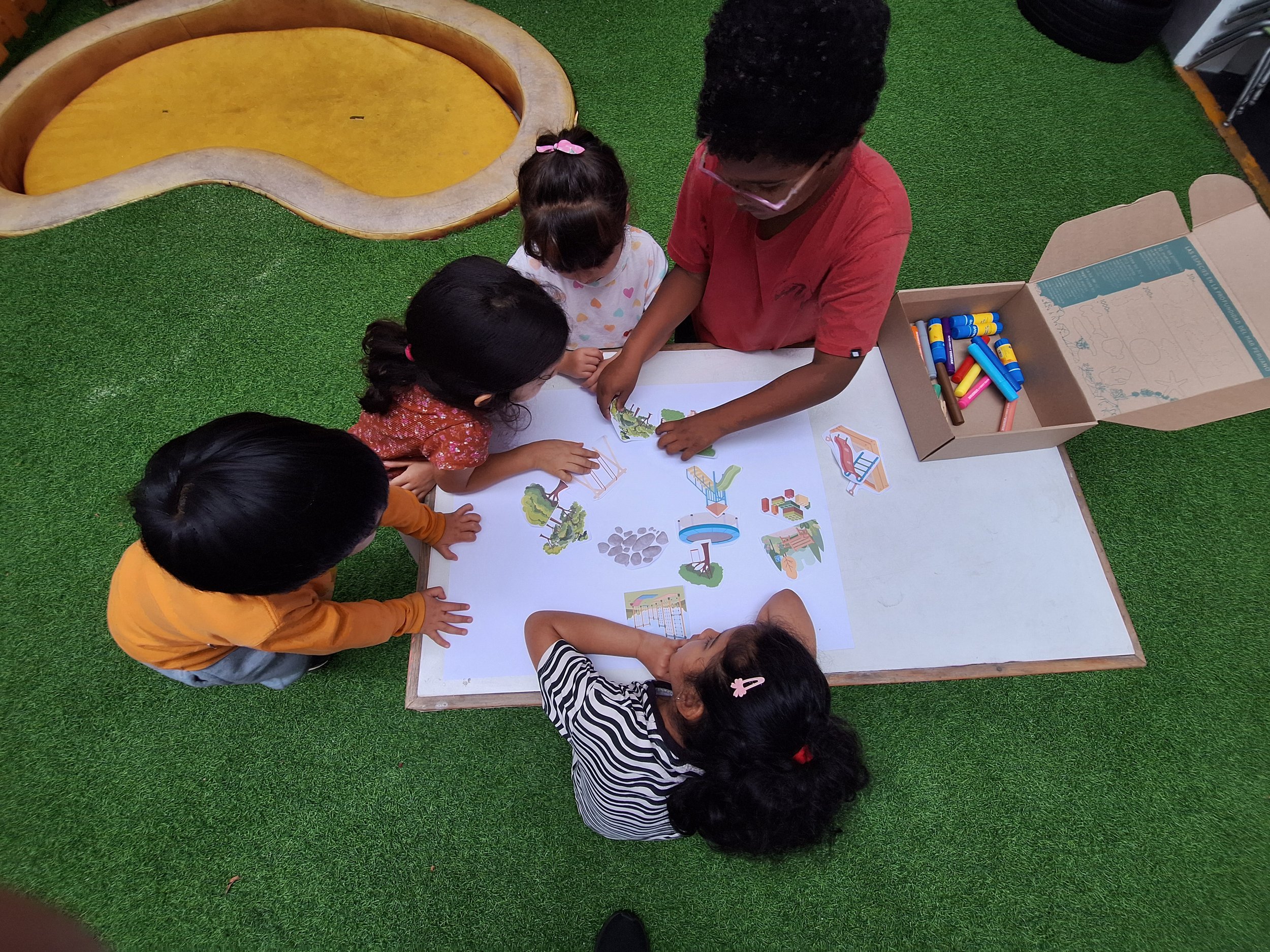
The journey began beyond the model itself. First, the Pumas observed the play spaces they know and the ones they usually visit. They talked about what they noticed in these spaces, which elements they liked, what they would change, and what they would like to incorporate into a new space. This first exploration allowed them to move from being playground users to thinking of themselves as designers.
Then came the moment to put their ideas on paper. In small teams, they created their first designs: floor plans, drawings, colors, structures, and proposals. At this stage, different ways of imagining space emerged, along with the need to reach agreements: What do we want to build? Where will each element go? How can we bring our ideas together?
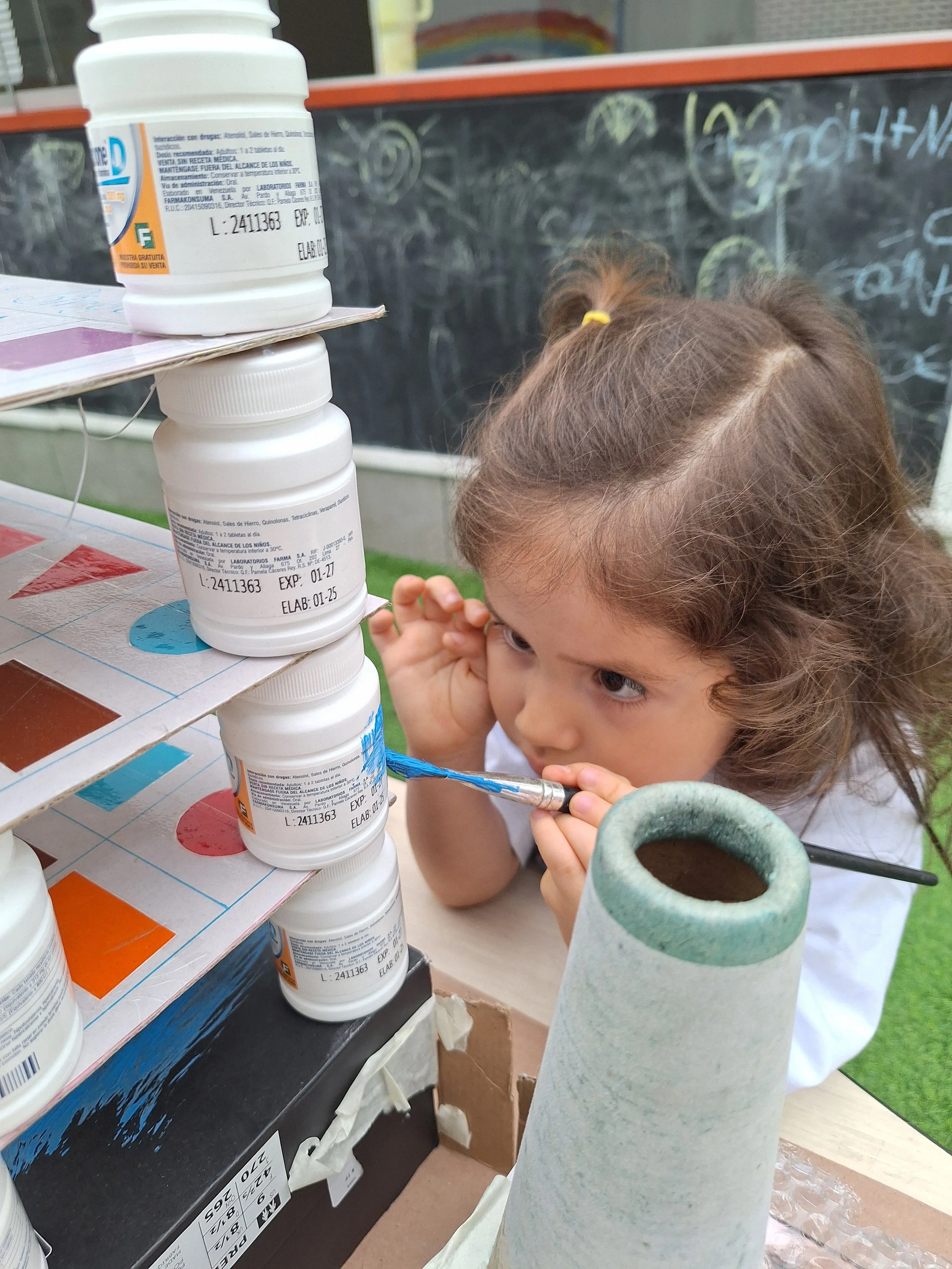
The third step was bringing the ideas to life. The ideas left the paper and met recycled materials, glue, paint, and structures that did not always behave as expected. Turning a drawing into a three-dimensional model meant discovering that some ideas worked on paper but needed to be modified when they were actually built. A tower might fall, a slide might not hold its shape, or a structure might need a different material to remain stable.
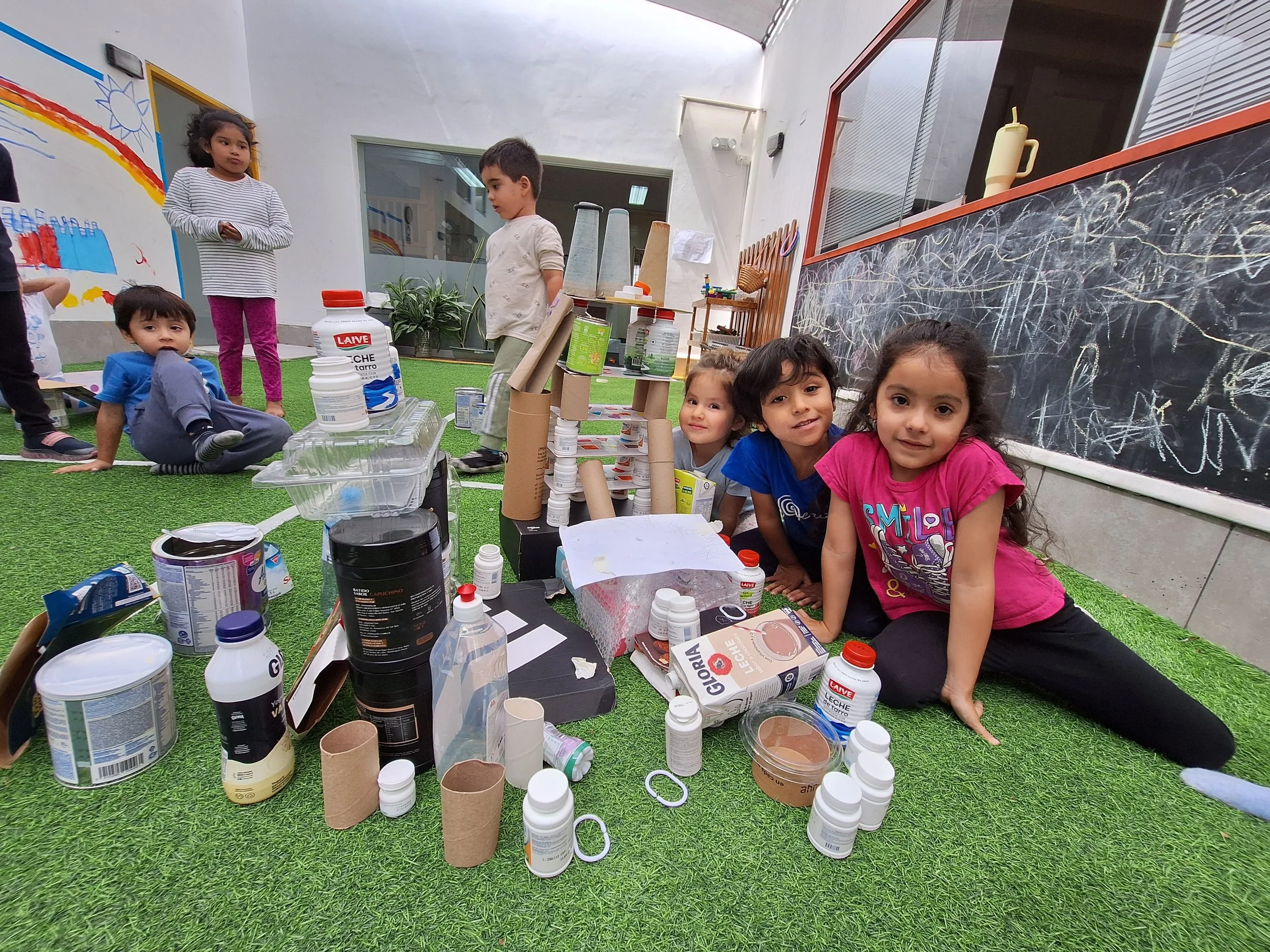
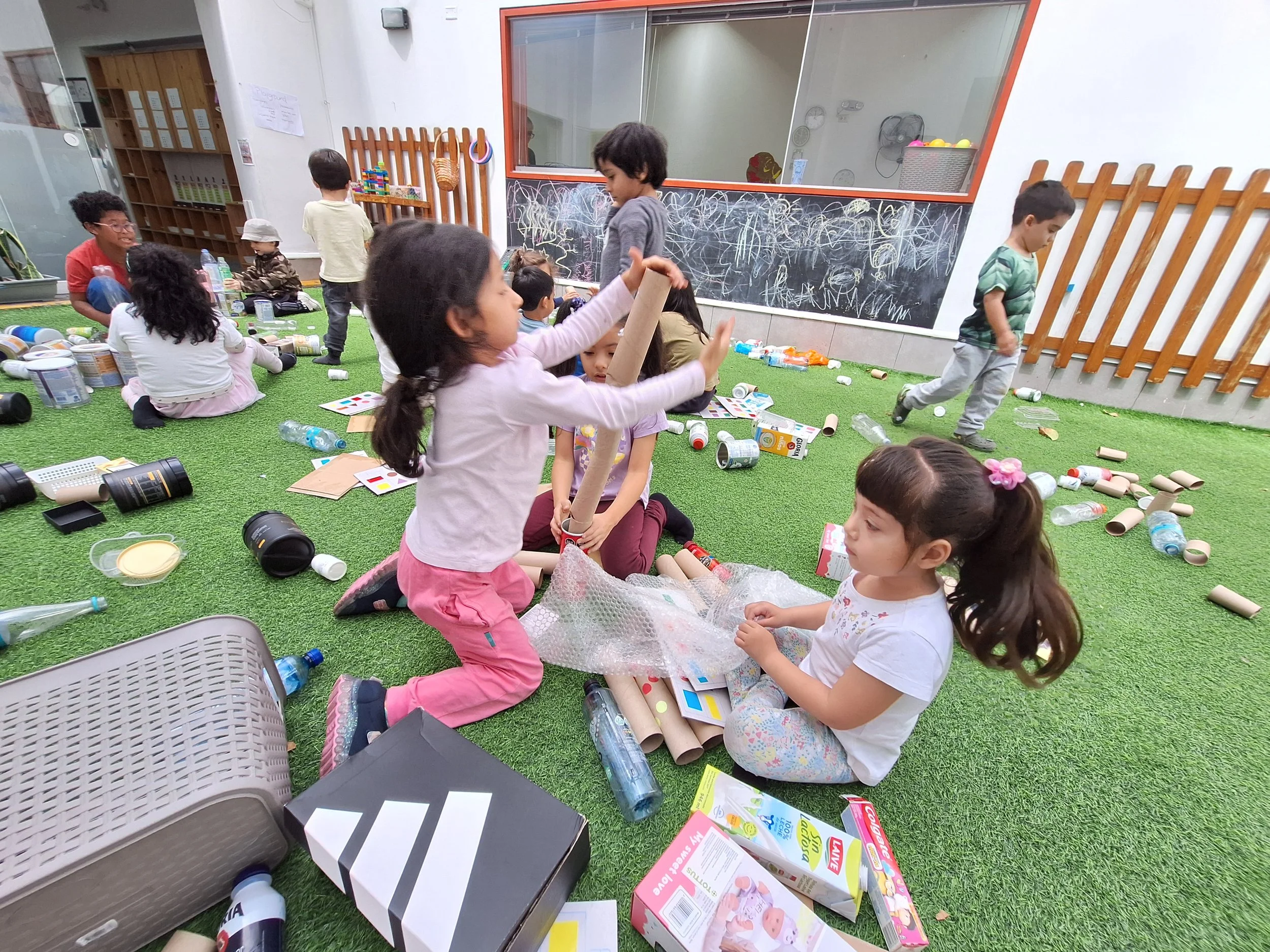
One of the most interesting learnings from the Pumas’ perspective was that designing also means rethinking. They had to test, observe what worked, and make new decisions based on what the materials and the construction process were showing them. The project thus became a concrete exercise in problem-solving. This process also involved significant challenges related to collaborative work. Building a playground together meant listening to other people’s ideas, negotiating, waiting, being patient, and making decisions as a team.
What Do Their Playgrounds Tell Us About How They Imagine the World?
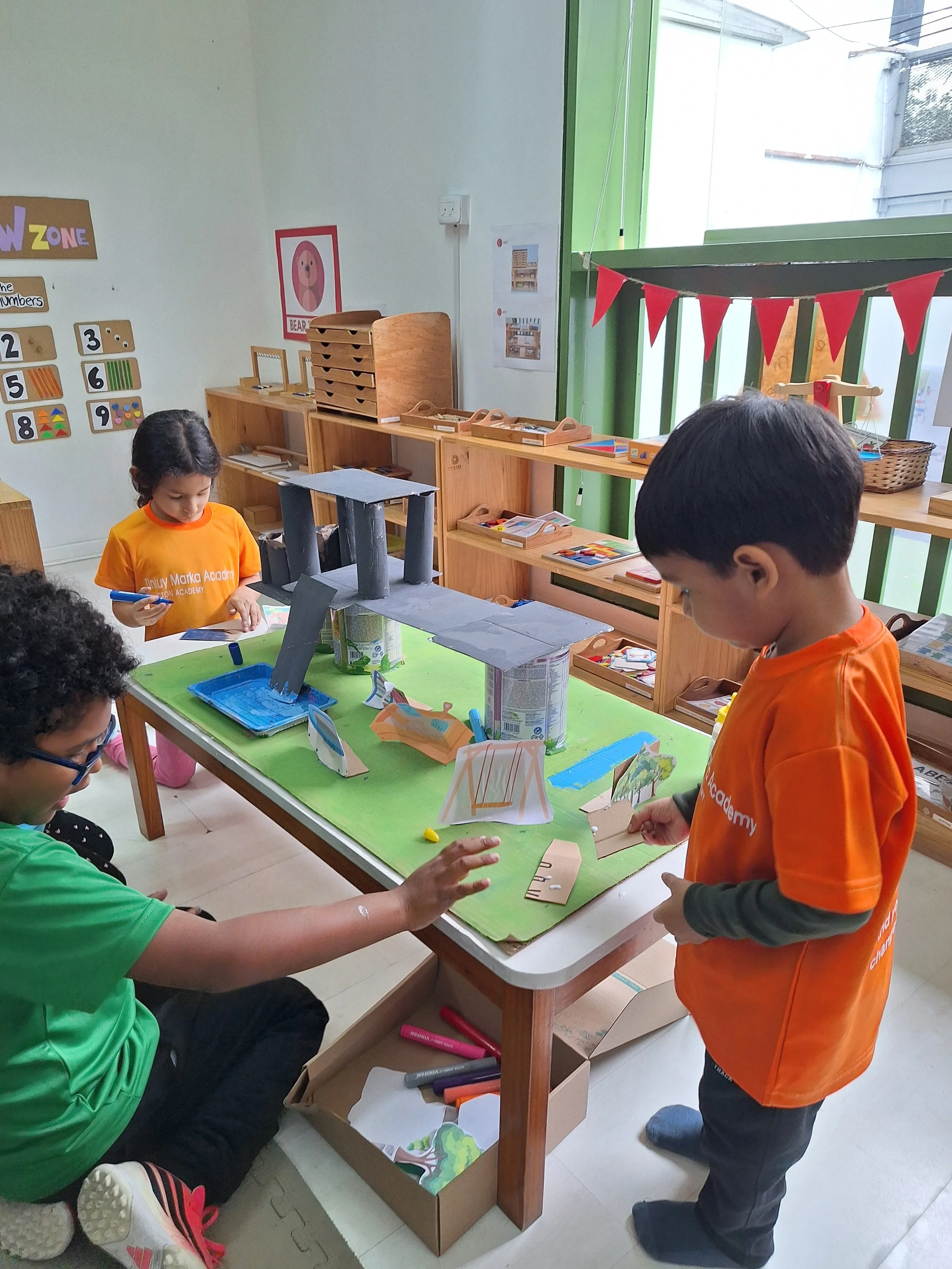
The most insightful observations emerged when we looked at the playgrounds through the Pumas’ own perspectives. Their proposals considerably expanded the possibilities of what a playground could be. They did not simply reproduce the playgrounds they already knew.
Many of their designs had no fences defining the space. Their playgrounds were wide and open, incorporating elements connected to air, movement, and adventure: zip lines—even one designed for adults—very tall slides, towers, and complex structures. They also imagined spaces with water and different resting areas for adults, children, and pets. They thought about aspects that do not necessarily belong to children’s play, such as parking areas for cars and buses, imagining that schools might visit the park. This detail is particularly interesting because it shows that, when designing, they were not only thinking about the child who plays, but also about the people and dynamics that make it possible for the space to exist and be used. Their perspective incorporated different users, needs, and ways of inhabiting the space.
At the same time, their proposals showed us that, for the Pumas, the real and the imaginary are not necessarily separate worlds. Some designs combined concrete playground structures with elements inspired by castles, magical houses, or settings such as the house in Encanto, including mysterious doors and spaces that invited us to imagine what might be waiting behind them. This combination revealing a playground can be, at the same time, a place to run, rest, climb, slide, and wait for the bus; but it can also be a castle, a mysterious house, or the beginning of an adventure. Functionality and imagination do not compete with each other; they can coexist and enhance one another.
To close, I find it magical to share that the Pumas began by observing existing spaces, then imagined alternatives, represented them graphically, and finally had to engage with the possibilities and limitations of the materials. This journey allowed them to experience something fundamental: ideas can transform when they come into contact with reality.